Categories
France

Armin Hokmi – Shiraz

  • July 3rd – 4th, 2025 Festival de la Cité, Lausanne
  • August 21st – 22nd, 2025 Dansens Hus, Oslo
  • August 26th, 2025 Mladi Levi International Festival, Ljubljana
  • September 6th, 2025 Neimenster, Luxembourg
  • September 24th, 2025 SIDance International Dance Festival, Seoul
  • October 15th, 2025  Romaeuropa Festival, Rome
  • October 17th, 2025 IDFT, Tirana
  • October 24th – 25ht, 2025 Tanzhaus NRW, Düsseldorf
  • November 7th – 8th, 2025 Pavillon ADC, Geneva
  • November 14th – 15th, 2025 Sadler’s Wells, London
  • March 10th – 11th, 2026 POLE SUD CDCN, Strasbourg
  • March 13th, 2026 Le Carreau, Forbach
  • March 17th – 18th, 2026 Maison de la Danse, Lyon
  • March 21st, 2026 CNDC, Angers
  • March 25th – 28th, 2026 Théâtre de la Ville, Paris
  • March 31st – April 1st, 2026 Festival À Corps, Poitiers

60 minutes

A Revelation
© Armin Hokmi Kiasaraei

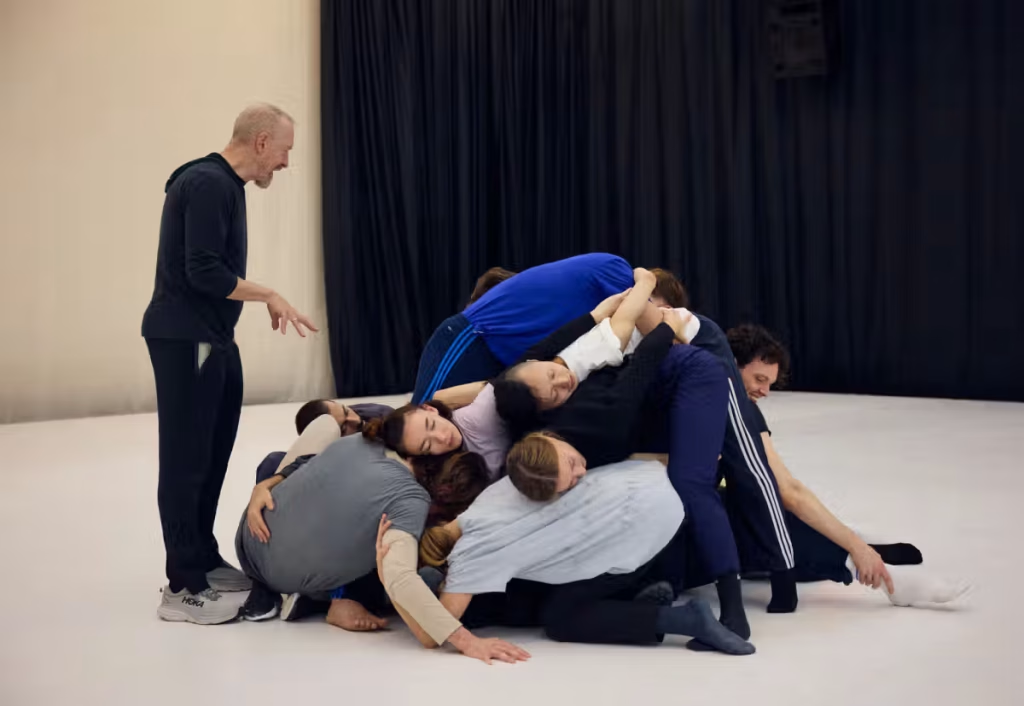
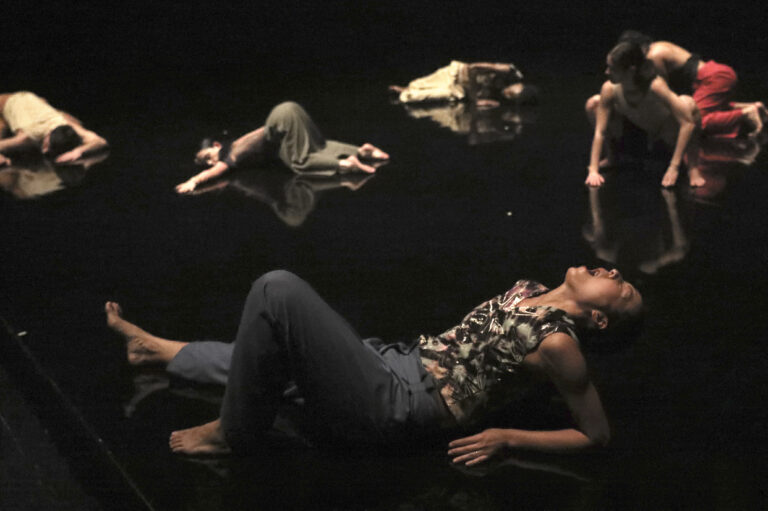
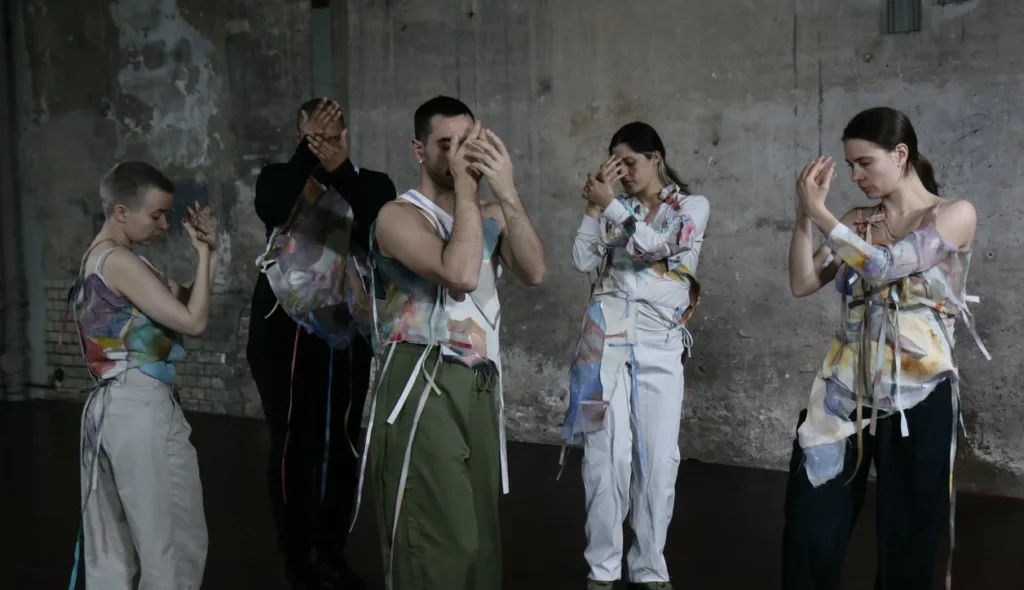
Shiraz is a choreography for six dancers, weaving together a fabric of movements and gestures. Their insistent energy, moments of convergence and passage through ephemeral constellations are what takes center stage in this performance. A pulsating dance imbued with a sense of enchantment and longing, coiling and uncoiling to the pulsating beat of a capturing music.

The starting point for this piece is the Shiraz Arts Festival. A festival for live arts that took place between 1967 and 1977 in south of Iran and radically rethought the relationship to the audience and modalities of framing art works. Armin Hokmi, together with the team, places it into our present day in the form of a revival, by giving it a new appearance through a dance performance. Shiraz is both a homage and a fictional setting. It seeks to reimagine the ambitions of the festival and its love for the live arts, their autonomy as art forms and their common roots across geographical borders.

Shiraz is created out of a devotion to a notion of dance and choreography that emphasizes their power to ignite joy, bring about experiences of delving into sensuous worlds, and their ability to transform perception and our modes of affective engagement with live performance.
Categories
Archive

Akram Khan & Manal AlDowoyan – Thikra: Night of Remembering

June 22nd – 24th, 2025 Montpellier Danse, Montpellier
July 29th – August 1st, 2025 ImPulsTanz, Vienna
August 17th, 2025 Santander International Festival, Santander

September 19th – 21st, 2025 Les Théâtres de la Ville de Luxembourg, Luxembourg
September 26th – 28th, 2025 Théâtre Sénart, Lieusaint
October 2nd – 18th, 2025 Théâtre de la Ville, Paris
October 28th – November 1st, 2025 Sadler’s Wells, London
November 5th – 6th, 2025 Romaeuropa Festival, Rome
November 11th – 12th, 2025 Berliner Festspiele, Berlin

November 19th – 20th, 2025 Tanz Köln, Cologne
65 minutes

No Future without a Past

© Camilla Greenwell

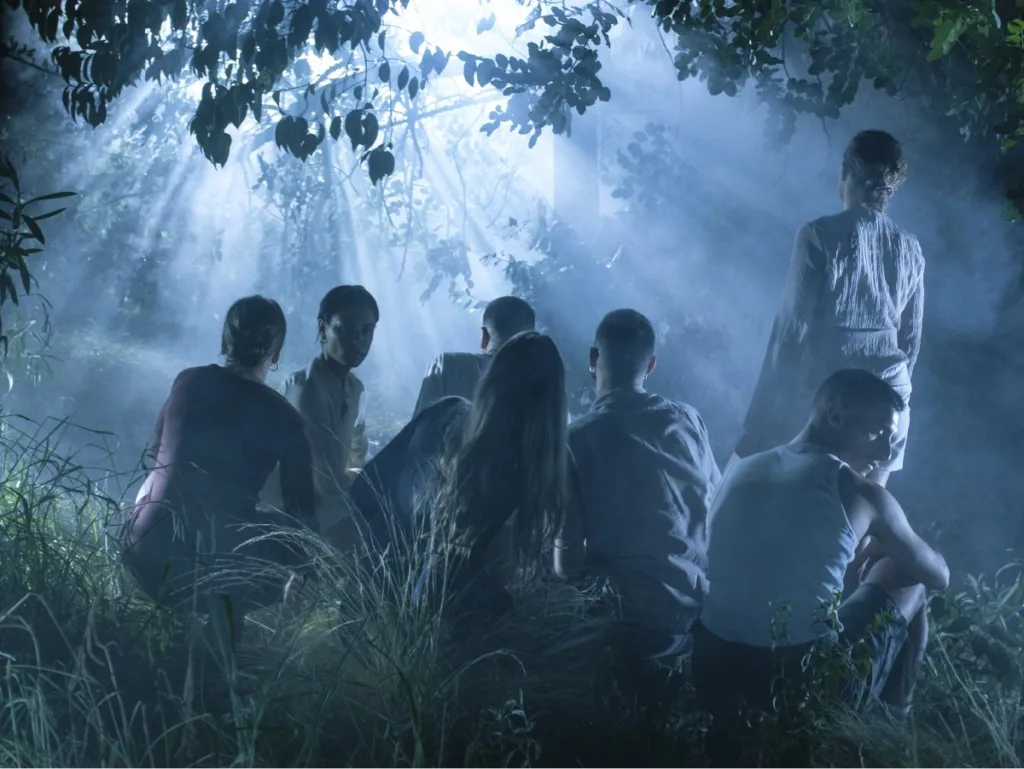
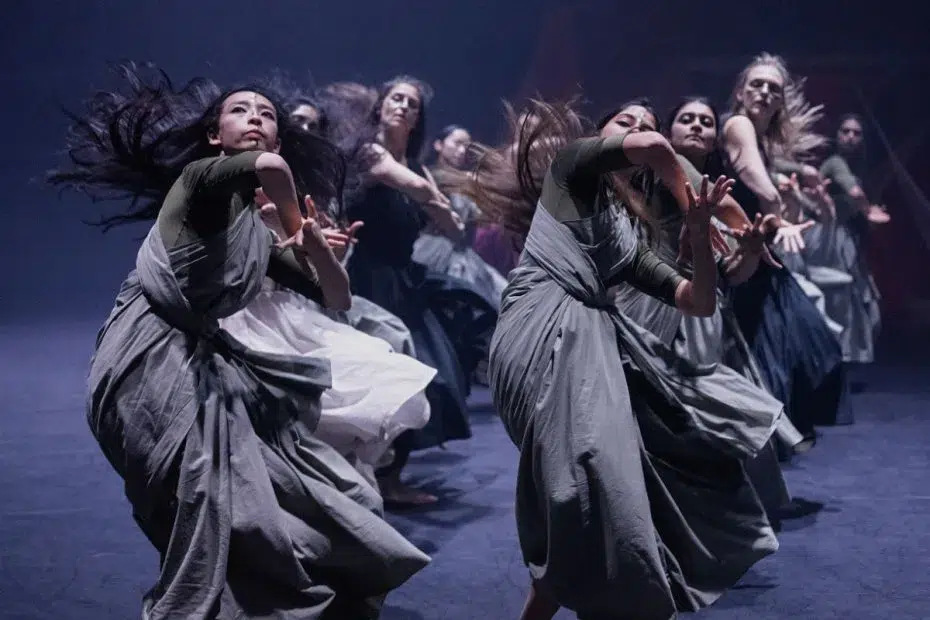
Thikra: Night of Remembering is Akram Khan Company’s latest production created in collaboration with award-winning visual artist Manal AlDowayan.

Thikra draws inspiration from AlUla’s ancient landscapes, mythology and cultural heritage to evoke the idea that “without a past, there is no future.”

Blending Bharatanatyam with contemporary, the piece is performed by a collective of all-female voices, accompanied by an original score from Aditya Prakash, sound design by Gareth Fry, lighting by Zeynep Kepekli and dramaturgy by Blue Pieta.

Categories
Benelux

Lia Rodrigues – Borda

  • May 28th – 31st, 2025 Kunstenfestivaldesarts, Brussels
  • June 3rd – 4th, 2025 PACT Zollverein, Essen
  • June 7th – 8th, 2025 One Dance Festival, Plovdiv
  • June 16th – 17th, 2025 MUFFATWERK, Munich
  • June 20th – 21st, 2025 WIENER FESTWOCHEN, Vienna
  • July 10th – 12th, 2025 Julidans, Amsterdam
  • August 27th – 28th, 2025 Tanz im August, Berlin
  • September 6th & 8th, 2025 Biennale Danse Lyon, Lyon
  • September 12th – 17th, 2025 Centquatre-Paris, Paris
  • September 19th – 21st, 2025 Théâtre Chaillot, Paris
  • September 24th, 2025 L’Azimut, Antony | Châtenay-Malabry
  • October 10th – 11th, 2025 Romaeuropa Festival, Rome
  • May 22nd – 23rd, 2026 DE SINGEL, Antwerp

60 minutes

Comfort and Hope

© Sammi Landweer

Borda in Portuguese refers to embroidery, decoration, but also to a border, the periphery, something that separates. Geographical and political borders create contradictions: hospitality and hostility, native and non-native. Who belongs and who is excluded, who has a right to exist? Metaphorically, the word ‘borda’ also means imagination, the ability to cross borders, to transcend.

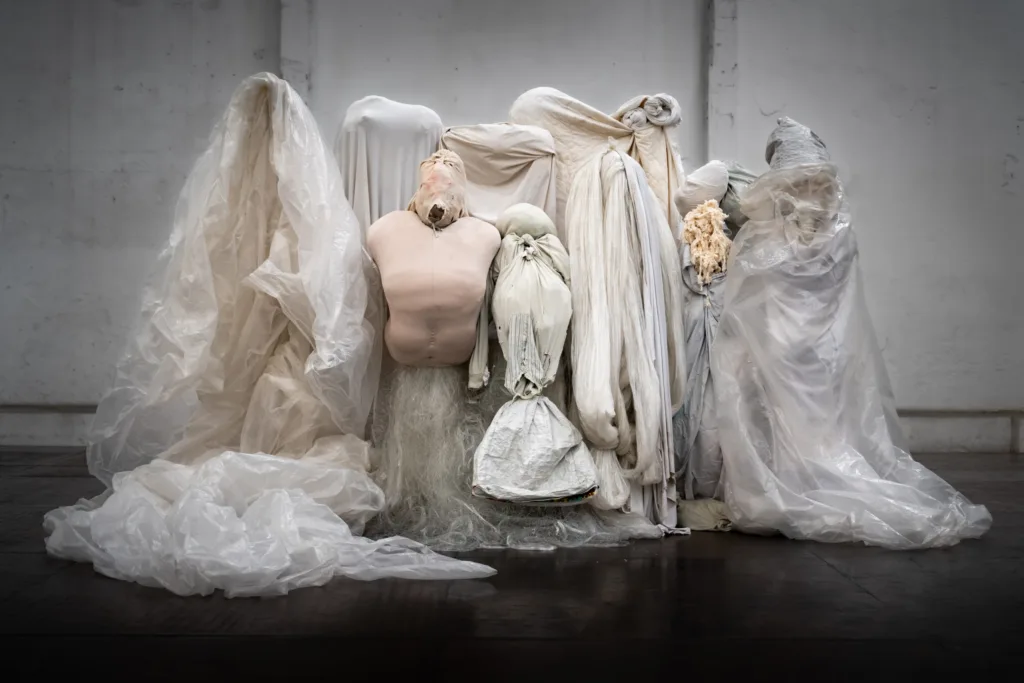
With a new generation of dancers, choreographer Lia Rodrigues weaves a porous embroidery of liquid otherness, with edges that fray, float and dance. In her signature style, starting from the energy of the collective and using simple materials like textiles and plastic, she creates a unique ballet between bodies and matter whose recipe only Rodrigues seems to know. Bodies clump together into constellations, form masses and separate again. With great care, what was separated is brought back together. The result is a succession of powerful images and colourful tableaux. 

Rodrigues, after the savoured large-venue productions Fúria and Encantado, once again blankets us in comfort and hope.

Categories
DACH region

William Forsythe – UNDERTAINMENT

May 23rd – 31st, 2025 Hellerau, Dresden
June 5th – 8th, 2025 Schauspiel Frankfurt, Frankfurt
June 13th – 15th, 2025 De Singel, Antwerp
June 27th, 2025 Theater Freiburg, Freiburg
July 7th – 8th, 2025 Julidans, Amsterdam

September 9th – 10th, 2025 Auditorium Conciliazione, Rome
September 21st – 22nd, 2025 Biennale Danse Lyon, Lyon
October 4th, 2025 Aperto Festival, Reggio Emilia
November 13th – 15th, 2025 Mercat de les Flors, Barcelona
December 4th – 6th, 2025 Kampnagel, Hamburg
Duration: unknown

Double bill with another program

Forsythe Returns to Frankfurt

© Dominik Mentzos

This is a full circle moment. William Forsythe is regarded as one of the most important choreographers of the late 20th century. His innovative approach to the tradition of ballet has opened up directions for dance that would otherwise be difficult to imagine. From 1984 to 2004, Forsythe directed the Ballett Frankfurt and from 2005 to 2015 The Forsythe Company, which was later renamed Dresden Frankfurt Dance Company.

Forsythe is now returning to the place of this legacy of many years and is developing a new work with the company for the first time. Starting from a toolbox of improvisational construction, he creates a structural order which, instead of signifying something else, offers an aesthetic pleasure in itself. Like in a kaleidoscope, patterns emerge that are always unpredictable and surprising yet within a clear framework. The dancers explore the movement system that they themselves form to its limits. The audience is invited to follow this exploration and experience the work as a living, breathing system.

Categories
Mediterranea Eastern Europe Benelux France

Christos Papadopoulos – My Fierce Ignorant Step

  • May 8th – 18th, 2025 Onassis Stegi, Athens
  • May 30th, 2025 One Dance Festival, Plovdiv
  • June 27th – 28th, 2025 Festival de Marseille, Marseille
  • July 2nd – 3rd, 2025 Julidans, Amsterdam
  • November 14th – 16th, 2025 Romaeuropa Festival, Rome
  • November 19th, 2025 Aperto Festival, Reggio Emilia
  • December 3rd, 2025 Concertgebouw Brugge, Bruges
  • December 6th, 2025 Theater Rotterdam, Rotterdam
  • January 8th – 9th, 2026 PAWILON TAŃCA, Warsaw
  • January 24th – 25th, 2026 TMP, Porto
  • May 24th – 30th, 2026 Théâtre de la Ville, Paris

60 minutes

Christos Papadopoulos’ Most Personal Work

© Christos Papadopoulos

With My Fierce Ignorant Step (Working Title), Papadopoulos seeks to consciously process the influence that “Axion Esti”—the monumental work by Mikis Theodorakis founded on the poetry of Odysseas Elytis—exerted on him, exploring the extent to which sound and speech can dilate and reach a state of abstraction that alludes to that of a movement: a lifted arm, an oscillating body, a trembling leg.

For the choreographer, the first impulse for the creation of “My Fierce Ignorant Step (Working Title)” is grounded in aural memories of his childhood and younger age, memories that he shares with many other Greeks: collective memories that are connected with the fate of this country, even if this is not immediately apparent. Is it possible to work on a text with the same composition principles applied to the choreography of a body? How close to words can a body come, and vice versa? Can this turn into a shared, transparent, and simple experience?

Categories
Archive

Roland Petit – La Chauve-souris

December 31st, 2024 – January 5th, 2025 Teatro dell’Opera di Roma, Rome
Duration: not indicated

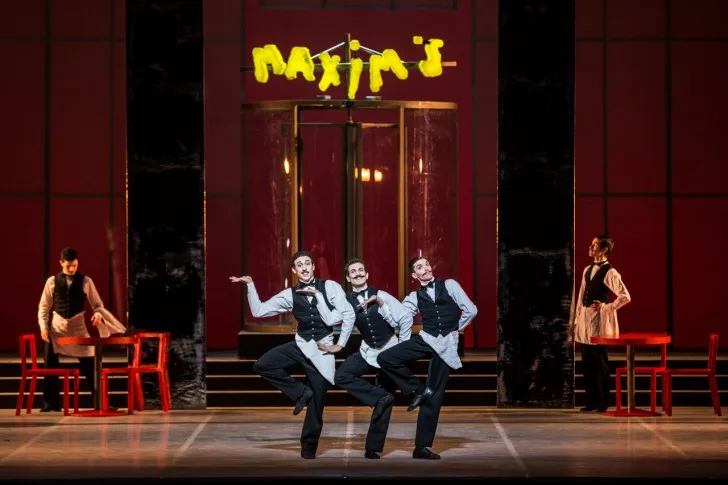
Cabaret Maxim’s in Rome

@Yasuko Kageyama

Every night, Johann puts on a bat’s wings and flies off. Bella, troubled by her husband’s pleasure-seeking at night, consults with her friend Ulrich and starts a strategy of disguising herself as a mysterious beauty to seduce her husband. One night, Johann is captivated by her at a cafe and chases her without knowing that she is his own wife.He is soon involved a fracas and arrested. What will happen to the married couple’s love?

La Chauve-souris combines refined humor, urbane sensibility, and a touch of sadness at the end. Premiered by the Ballet National de Marseille in Monte Carlo in 1979, the ballet piece is based on the classic comic operetta Die Fledermaus by Johann Strauss II.

Categories
Archive

Baro d’evel – Qui Som?

September 26th – 28th, 2024 Teatro Argentina, Rome
October 2nd – 4th, 2024 Théâtre 71, Malakoff
October 11th – 12th, 2024 Théâtre de Liège, Liège
October 30th – 31st, 2024 Halles de Schaerbeek, Brussels
November 13th – 15th, 2024 Tandem scène nationale, Douai
December 2nd – 15th, 2024 ThéâtredelaCité, Toulouse
January 10th – 11th, 2025 Le Parvis scène nationale, Tarbes
January 24th – February 1st, 2025 MC93, Bobigny
February 18th – 22th, 2025, Comédie de Genève, Geneva
2h

Part of the 78th Avignon Festival


© Christophe Raynaud de Lage

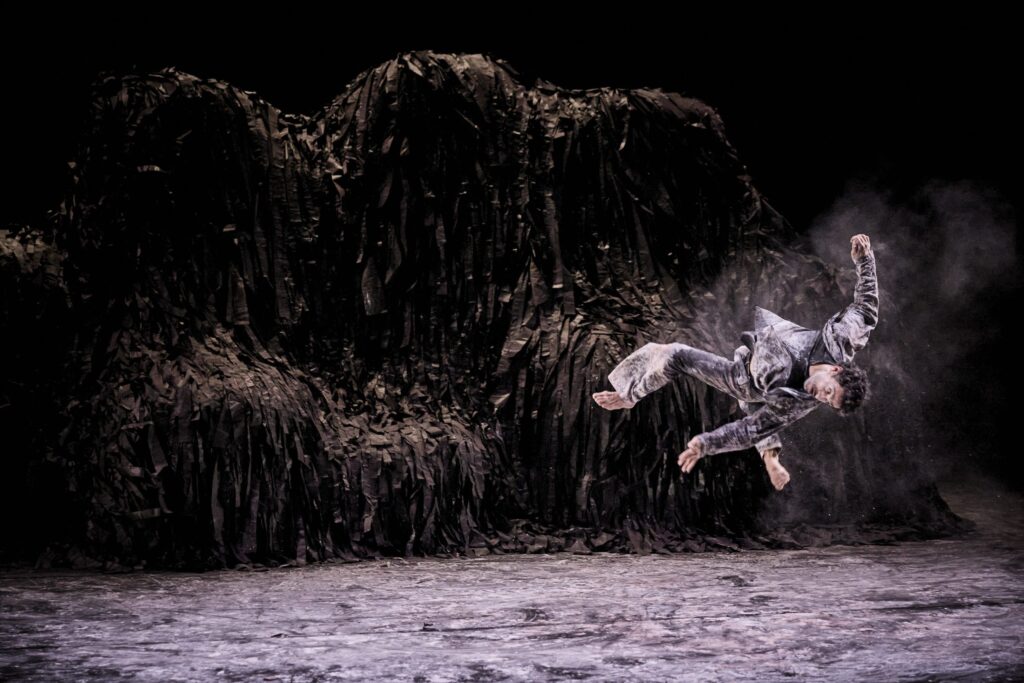
An opus even more choreographic than the previous works, Qui som? , under the influence of the Spanish group Mal Pelo, could be considered the heir to Maguy Marin’s May B or Paso Doble by the duo Josef Nadj and Miquel Barceló.

Philippe Noisette

The first part of a triptych in which ceramic is both the material and the gesture of an investigation into our worlds in the making, a journey through our ways of believing and doing together, Qui som? is a wager: that dreaming is an exploratory and transformative power, an imaginary force that overflows each of us to link us to other presences, a way of orienting ourselves in obscure journeys, in secret lands. It’s a struggle. It’s alive. In colour. In clay. In plastic. In scraps and eternity.

“Our inner worlds, our intimate territories, are the breeding ground for the social landscapes to come. So if what’s to come is already here, inside our bodies, if it’s already being made inside us, we’re trying to highlight what keeps the joy, the desire, what resists, sings and dances inside us forever, to give ourselves the courage to see ourselves and not forget the worst.”

Categories
Archive

Jan Martens – VOICE NOISE

September 24th – 28th, 2024 charleroi danse / la raffinerie, Brussels
October 12th – 13th, 2024 Teatro Argentina, Rome
October 17th – 19th, 2024 mercat de les flors, Barcelona
November 6th, 2024 Theater Rotterdam, Rotterdam
November 19th – 23th, 2024 Théâtre de la Ville, Paris
December 11th, 2024 Concertgebouw Brugge, Bruges
December 14th, 2024 Leietheater, Deinze

90 minutes

The Gender of Sound

© Phile Deprez

On a selection of thirteen tracks by women, his dance spares us the illustration. Instead, it acts as a filter to enhance our listening experience.

Léa Poiré

‘Redundant.’ Or more bluntly: ‘Irritating noise.’ This is how the voice of the woman has often been considered from ancient Greek times to today.

VOICE NOISE is inspired by Anne Carson’s essay ‘The Gender of Sound’ (1992), in which she exposes how patriarchal culture has sought to silence women by ideologically associating women’s sound with monstrosity, disorder and death.

In VOICE NOISE, some innovative, unknown and/or forgotten women’s voices from the past hundred years of music history are given a stage. By doing so, Jan Martens takes another step in his efforts to shape an alternative canon.

Six dancers respond to recordings in which the human voice can be heard in various guises: humming, soothing, shrieking, whispering, singing. Gradually, they discover their own voice.