Inspired by graffiti saying “Art will save the world”, Eggermont invites young people to share memories, poems, and references. These fragments form a time capsule, portraying a generation in search of meaning. Through his gestural language and music, Eggermont’s dance becomes a refuge, affirming art as a force for resilience and renewal in troubled times.
The São Paulo City Ballet presents a European tour with remarkable choreographies such as ‘Boca Abissal’, ‘Fôlego’ and ‘Réquiem SP’, signed by renowned Rafaela Sahyoun and Alejandro Ahmed.
Rafaela Sahyoun
Rafaela Sahyoun is a Latin American dance artist from São Paulo, currently based between Brazil and Portugal. She spirals through the intertwined roles of being a dancer, a young choreographer, and a teacher. She is fascinated by the ever-evolving landscape of performative practices, community, and context. She dedicates herself to artistic and pedagogical projects that unfold and shape-shift continuously through ongoing research and shared practices.
Actively collaborating with artists, researchers, students, and art institutions in Brazil and abroad, she has a strong inclination toward hybrid formats of collaboration in dialogues with multidisciplinary disciplines. Her most recent choreographic work, Fôlego (2022), was commissioned by São Paulo City Ballet (Balé da Cidade de São Paulo, BCSP) in partnership with São Paulo Cultural Centre (Centro Cultural de São Paulo, CCSP) and had its 2023 season at São Paulo Municipal Theatre (Theatro Municipal de São Paulo).
Alejandro Ahmed
Winner of three APCA (São Paulo Association of Art Critics) awards, as well as the Funarte Petrobras Dance Promotion Award, Bravo! Prime Award for Culture, and the Sergio Motta Art and Technology Award, Alejandro Ahmed is one of the most important choreographers in contemporary Brazilian dance. Born in Montevideo, Uruguay, he moved with his family to Florianópolis, Brazil, at the age of three, where he began dancing at just twelve.
As a guest of the São Paulo City Ballet in 2022, he conceived and choreographed a piece by the American avant-garde composer John Cage, written in the early 1990s, resulting in the performance “Sixty Eight in Axys Atlas.” Alejandro Ahmed now returns to his partnership with the São Paulo Municipal Ballet, this time as artistic director of the São Paulo City Ballet.
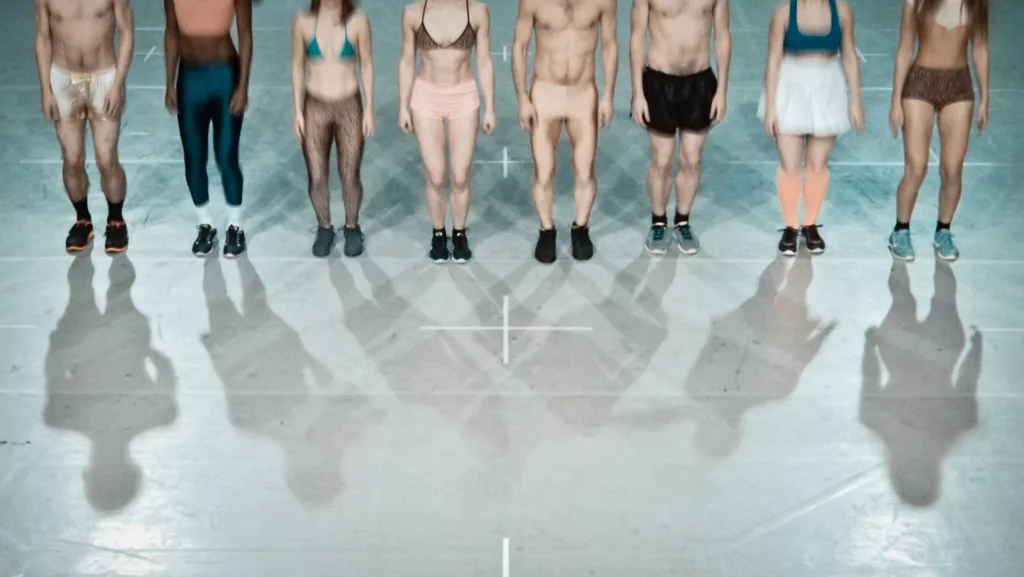
Thanks to its radical choreographic form, THE DOG DAYS ARE OVER revealed the audience’s perception of dancers, choreographers, spectators and the cultural policy at the time. Ten years on, these questions are still very much relevant due to current political and social trends: Where does the thin line between art and entertainment lie? Who are we as an audience when we contemplate the suffering of dancers from the theatre like a bullfight in an arena? Is contemporary dance striptease for the elite? THE DOG DAYS ARE OVER makes the viewer shift in his position: from being merely subjected to the experience to actively reflecting on it.
November 8th – 10th, 2024 National Performing Arts Center, Taipei November 15th – 16th, 2024 Rohm Theatre Kyoto, Kyoto November 20th, 2024 The Museum of Art Kochi, Kochi December 10th, 2024 Theater im Pfalzbau, Ludwigshafen December 18th – 19th, 2024 Auditorio de Tenerife, Santa Cruz de Tenerife January 25th, 2025 Teatro Municipal da Covilhã, Covilhã February 1st – 2nd, 2025 Sadler’s Well, London February 7th – 9th, 2025 Perth Festival, Perth February 26th – 27th, 2025 Le Quartz, Brest March 4th, 2025 Les Quinconces et L’Espal, Le Mans March 6th – 7th, 2025 CCN de Caen, Caen March 10th – 11th, 2025 Théâtre de Cornouaille, Quimper March 14th, 2025 Cndc Angers, Angers March 28th – 29th, 2025 Tanzmainz Festival, Mainz April 2nd – 4th, 2025 La Comédie de Clermont, Clermont-Ferrand April 8th, 2025 Théâtre de Nîmes, Nîmes April 15th, 2025 Espaces Pluriels, Pau April 30th – May 3rd, 2025 Danse Danse, Montreal May 16th, 2025 Theatro Circo, Braga July 8th – 9th, 2025 Colours International Dance Festival, Stuttgart 75 minutes
Collective identities are sources of belonging and inclusion but when they become mainstream, they can turn the other way around. I can recognise this issue in dance.
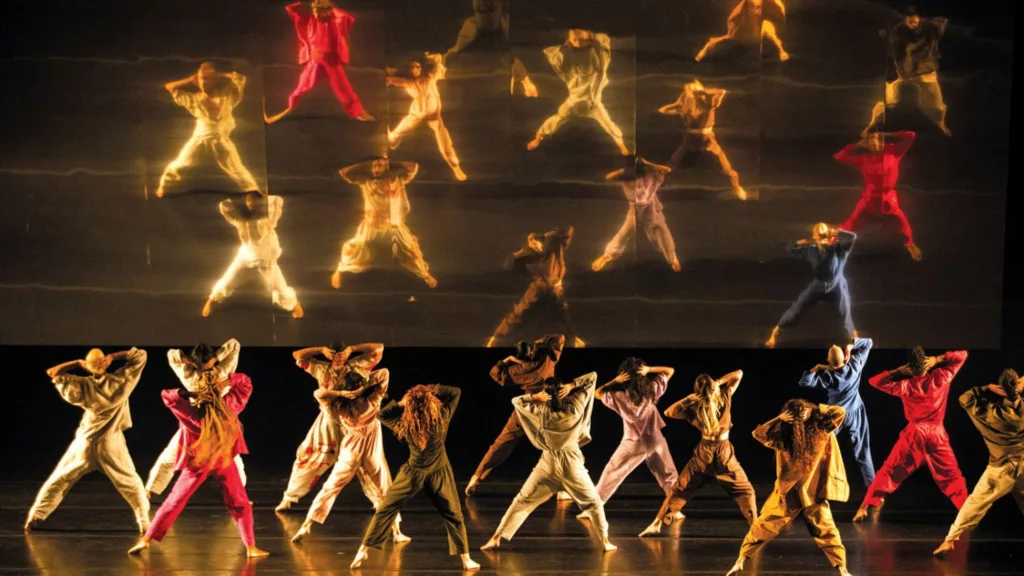
In CARCAÇA, ten dancers including Marco da Silva Ferreira and two musicians form an unconventional and joyful corps de ballet. The dancers perform intricate footwork merging folk dances with contemporary urban dance styles from groups such as LGBTQIA+ and communities from ex-colonies. In this choreography, Marco da Silva Ferreira uses dance to investigate communities, the construction of collective identity, memory and cultural crystallization. In other words: what if folk dances had not crystallized, had continued to redefine themselves and had incorporated the present at every moment?
The cast explores their collective identity in a physical, intuitive and unpretentious flow of the body, dance and cultural construction. They start from familiar footwork: clubbing, balls, cypher battles and the studio; they use the physical vocabulary of the contemporary, social, urban context as a lexicon of identity (house, kuduro, Top Rock, hardStyle, etc.). Through a slow construction process they connect these styles with the heritage and memory of dances from the past. These folk dances have remained stagnant without integrating new definitions of bodies, groups and communities, which were considered inferior. For these groups it was necessary to break with the authoritarian, totalitarian and paternalistic past.
In CARCAÇA an exercise is proposed that integrates the past and the present. The performance makes you think: How do you decide what to forget and what to remember? What is the role of individual identities in the construction of a community? What is the driving force of an identity? What world does the individual and collective body traverse? Or, better put, what bodies traverse the world?