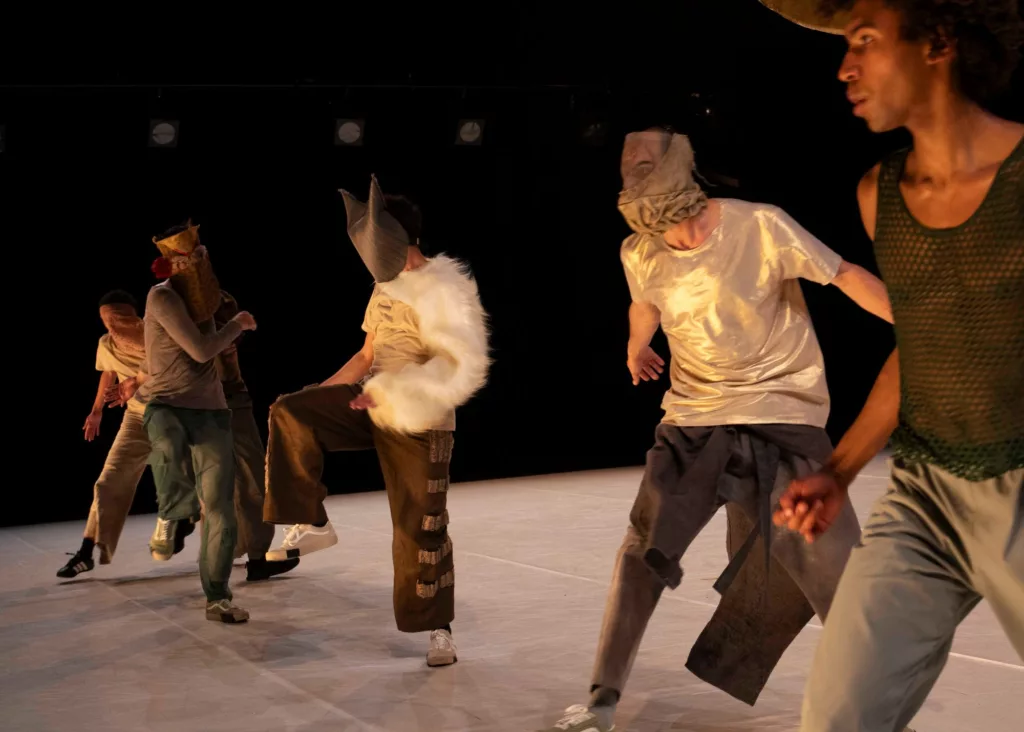
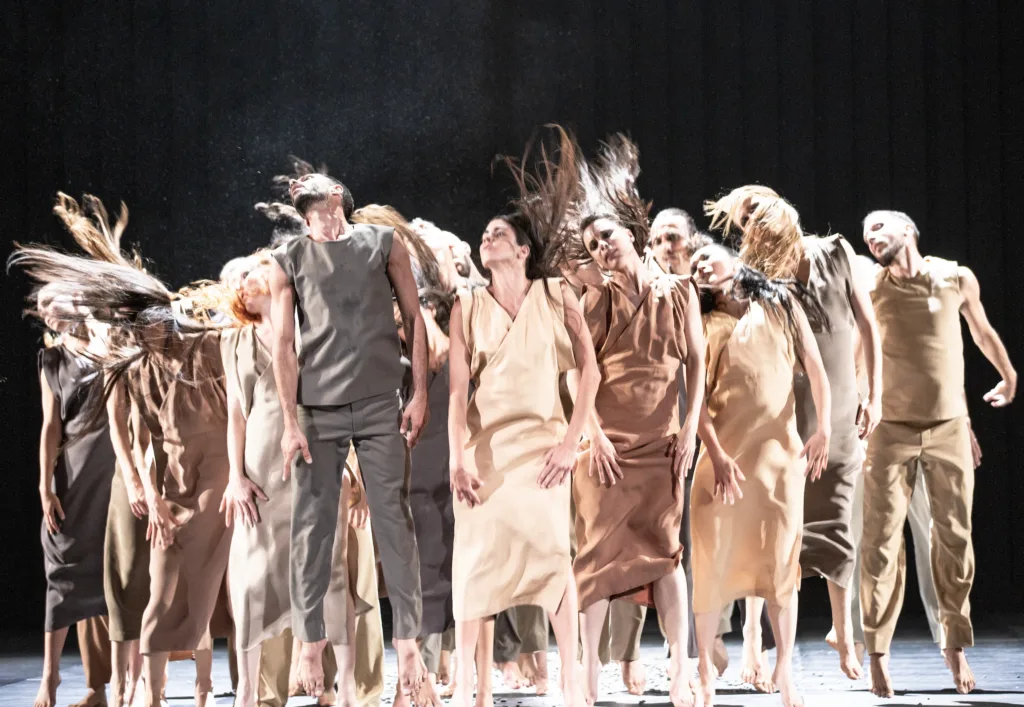
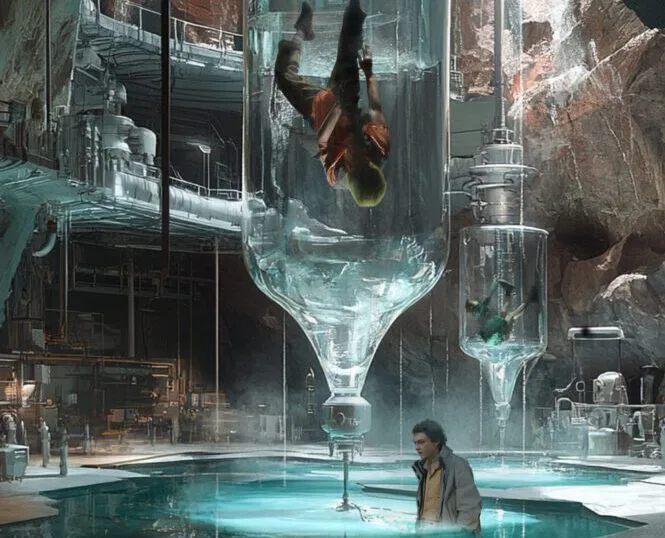
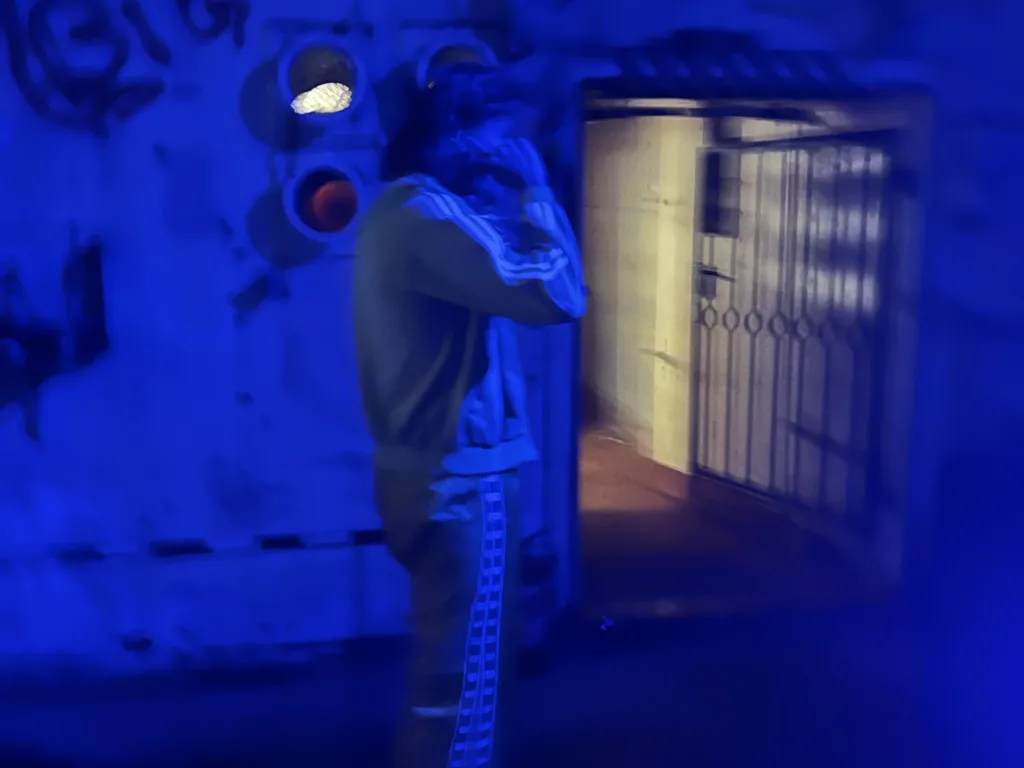
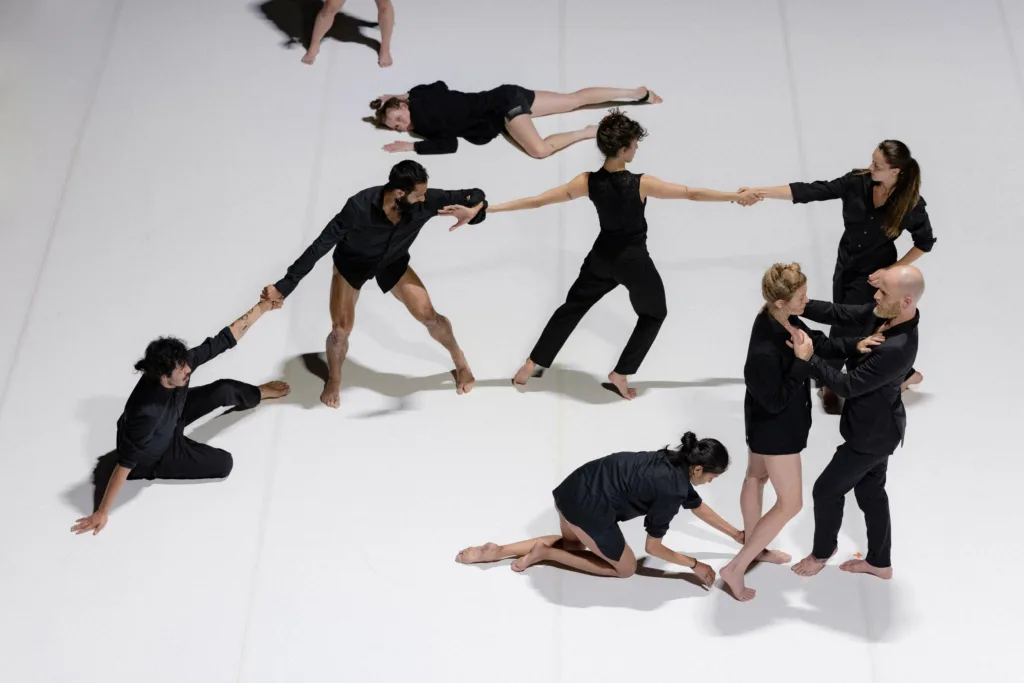
Magec / the Desert is the second part of a new trilogy by Radouan Mriziga, inspired by mythological stories from the Amazigh culture, and in particular those who have a close relationship with the Atlas Mountains in North Africa, in terms of spirituality, art, philosophy, craft, and science.
In his work, Mriziga continues his practice of collective creation, where rhythm, text, movement, and sound become interwoven through the contributions of his collaborators. The choreography unfolds as a polyphony of perspectives, where individual experiences intersect to form a shared, multifaceted vision. Like the layered textures of the desert, the performance resists singularity, instead offering a complexity that is at once intellectual and deeply sensory.
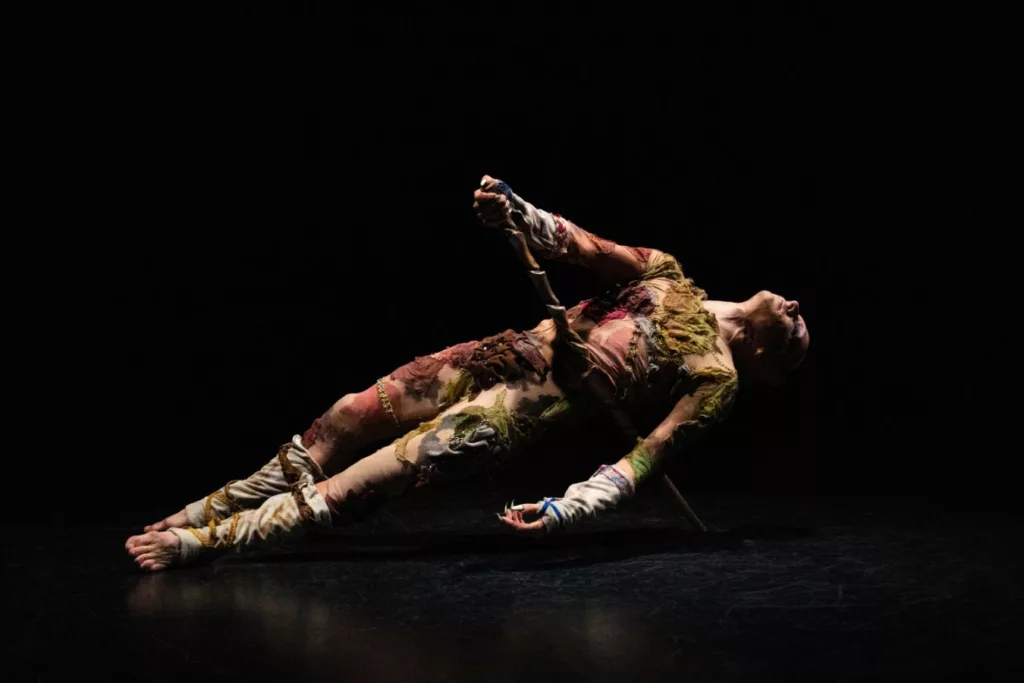
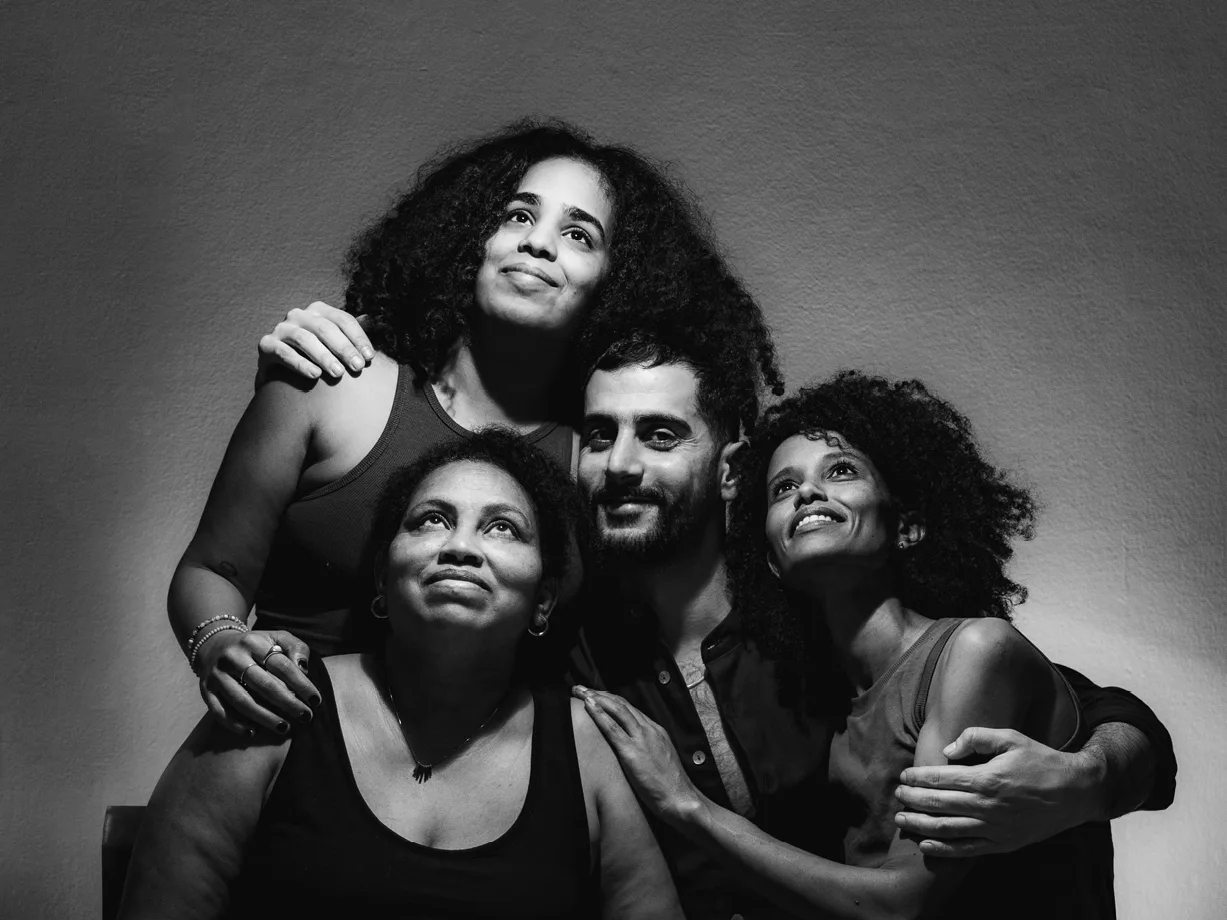
As an international co-production, artists Nina Laisné and François Chaignaud and singer Nadia Larcher have developed Último helecho, a performance that is carried by music, singing and dance at once and where Baroque meets South American folklore and mythology.
Último helecho is the second cooperation between François Chaignaud and Nina Laisné following Romances inciertos, un autre Orlando, for which they invented a special, poetically artistic cosmos: Drag and dance, old Spanish songs and queer hero*ine narratives were interwoven into a celebration of fluid identities and forms of expression.
While François Chaignaud also sings on stage, Nadia Larcher, who is a celebrated singer in South America, will try out the folklore dances of her native lands together with him on stage for the first time. The multifaceted repertoire of traditional music and dances from Argentina – ranging from chacareras via the majestic zambas to the huaynos – will serve as the underpinnings of the performance. The duo will be accompanied live on stage by six musicians whose artistic roots lie partly in Baroque and partly in folklore.
June 22nd – 24th, 2025 Montpellier Danse, Montpellier July 29th – August 1st, 2025 ImPulsTanz, Vienna August 17th, 2025 Santander International Festival, Santander September 19th – 21st, 2025 Les Théâtres de la Ville de Luxembourg, Luxembourg September 26th – 28th, 2025 Théâtre Sénart, Lieusaint October 2nd – 18th, 2025 Théâtre de la Ville, Paris October 28th – November 1st, 2025 Sadler’s Wells, London November 5th – 6th, 2025 Romaeuropa Festival, Rome November 11th – 12th, 2025 Berliner Festspiele, Berlin November 19th – 20th, 2025 Tanz Köln, Cologne 65 minutes
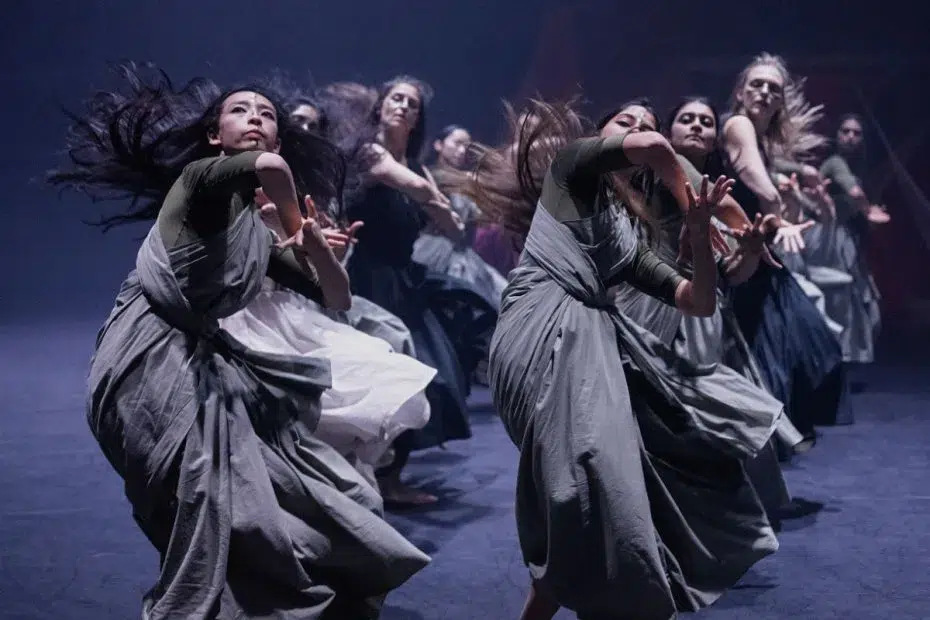
Thikra: Night of Remembering is Akram Khan Company’s latest production created in collaboration with award-winning visual artist Manal AlDowayan.
Thikra draws inspiration from AlUla’s ancient landscapes, mythology and cultural heritage to evoke the idea that “without a past, there is no future.”
Blending Bharatanatyam with contemporary, the piece is performed by a collective of all-female voices, accompanied by an original score from Aditya Prakash, sound design by Gareth Fry, lighting by Zeynep Kepekli and dramaturgy by Blue Pieta.
Considered one of the key works of modernism, it is a 100 years after the genesis of Igor Stravinsky’s Le Sacre du Printemps that Sasha Waltz takes on the Mariinsky Theatre’s offer to engage with this extraordinary piece of musical and dance history. Its title translates to The Rite of Spring. The strikingly archaic, tension-charged and angular composition is characterized by a strongly emphasized rhythm, precipitous drops and a layering of constantly repeating musical motives. Its many almost noise-like dissonances and expressionist sonic impressions have made the work one of the most famous pieces of music of the modern avant-garde.
Earlier large-format pieces of Sasha Waltz’, amongst others Na Zemlje (1998) or Continu (2010), have already showcased elements of her research into rites and group dynamics. With her choreography of Igor Stravinsky’s Le Sacre du Printemps, she dedicates an entire piece to these themes, in performances often accompanied by the Scène d’amour from Roméo et Juliette by Hector Berlioz and her choreography L’Après-midi d’un faune to the music of Claude Debussy.
June 2nd – 3rd, 2025 HAU, Berlin June 11th, 2025 Les Rencontres à l’Échelle, Marseille June 24th – 25th, 2025 Festival Theaterformen, Hannover July 5th – 8th, 2025 Festival d’Avignon, Avignon December 9th – 11th, 2025 Les Tanneurs, Brussels 70 minutes
The internationally acclaimed dancer and choreographer Ali Chahrour has created a language inspired by Arab myths and by the political, social, and religious context of his country. Through it, he explores the deep relationships between the body and movement, between tradition and modernity.
His new work When I Saw the Sea unfolds on a minimalist stage: the activists Rania, Zena and Tenei – the last two came to Lebanon as migrant workers – embark on a powerful journey of their previously unheard stories through dance, theatre and music. In doing so, they give a voice to countless other labourers from countries such as Cameroon, Sudan and Sierra Leone – people who have been deprived of their rights by the kafala system, which is similar to serfdom – and thus create a deep insight into the political and social reality of Lebanon.
When I saw the Sea highlights the abuses of this repressive labour system while paying tribute to the courage and resistance of women fighting for justice and freedom. With a mixture of personal and collective testimonies, the work touches on themes such as love, motherhood, war, exile and home. With the music of Abed Kobeissy and the soulful voice of singer Lynn Adib, this is a determined celebration of life, rising above the pain of past struggles.
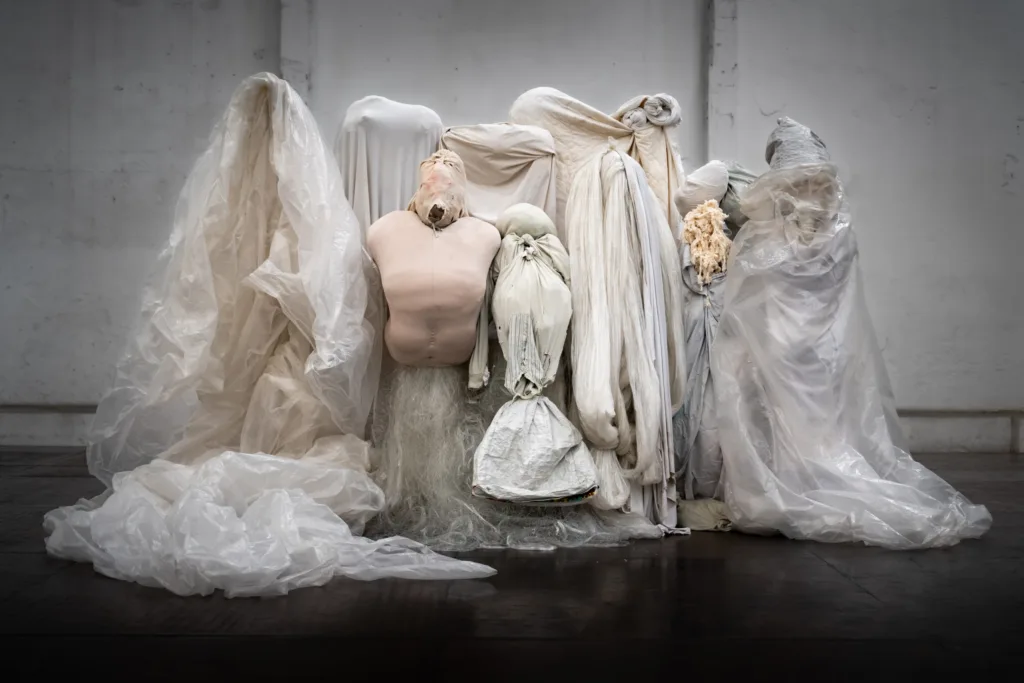
Borda in Portuguese refers to embroidery, decoration, but also to a border, the periphery, something that separates. Geographical and political borders create contradictions: hospitality and hostility, native and non-native. Who belongs and who is excluded, who has a right to exist? Metaphorically, the word ‘borda’ also means imagination, the ability to cross borders, to transcend.
With a new generation of dancers, choreographer Lia Rodrigues weaves a porous embroidery of liquid otherness, with edges that fray, float and dance. In her signature style, starting from the energy of the collective and using simple materials like textiles and plastic, she creates a unique ballet between bodies and matter whose recipe only Rodrigues seems to know. Bodies clump together into constellations, form masses and separate again. With great care, what was separated is brought back together. The result is a succession of powerful images and colourful tableaux.
Rodrigues, after the savoured large-venue productions Fúria and Encantado, once again blankets us in comfort and hope.
Pite and McBurney were transfixed when they saw each other’s work. But it was the ecological theme with which they found common cause. “Straight away we decided we wanted to make something centred on the climate crisis,” says Pite. “Which is not,” stresses McBurney, “separable from human crisis. We are all inescapably part of this living world.”
We are living in an age of extinction. Can we ever hope to give a name to what we are losing? What does it mean to bear witness to a violence in which we are both perpetrator and victim?
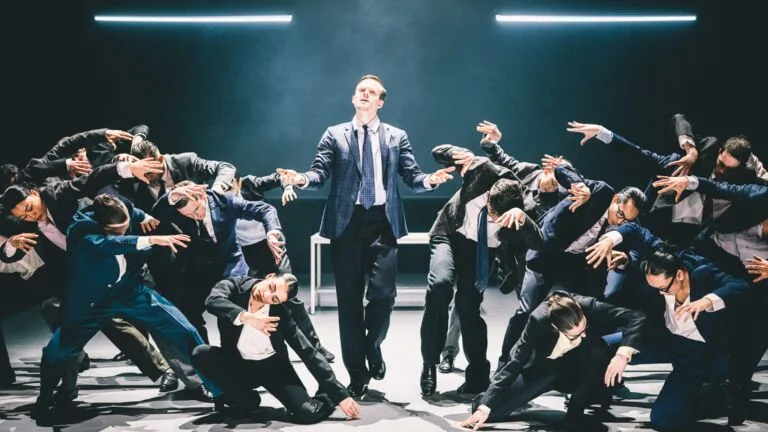
Across continents, choreographer Crystal Pite and Complicité Artistic Director Simon McBurney have exchanged ideas reflecting on their fears and cautious hopes for our age. Their process has drawn on a rich and surprising array of source materials: from the sound of ice caps melting to the clarion calls of climate change deniers, from scholastic lectures on the neuroscience of the brain to the cacophonous clatter of Instagram influencers.
Over a span of four years, the two world-renowned artists have created three works together for NDT 1, each developed in response to the last. Figures in Extinction [1.0] confronts us with everything that is dying on our planet, while [2.0] is a searing examination of our need for connection in a separated world. The third and final work will continue this cross-disciplinary exchange, making its world premiere in the UK in February 2025, and will offer a spark in the darkness as to where we – collectively, spiritually, and imaginatively – might go next.
There is a world of children and a world of adults – and then there is the world in between: the world of puberty. It is an exciting, irritating, and ever-changing place where the laws of reason, gravity, and motivation no longer apply. This is where THE EXPERIMENT will take place.
Three scientists will test the force of gravity, the consequences of risks, and the social dynamics of clones to answer the ultimate question: Is reality truly real?
A physical and metaphorical race against time: Three performers navigate a world that values productivity above all else. The tyranny of time becomes a force of constraint and urgency, amplifying the stakes of the performers’ pursuit of autonomy in a system that demands efficiency without acknowledging diverse experiences. This piece delves into the complexities of marginalized bodies in a society that prioritizes output over well-being, questioning the cost of constant productivity and the possibility of reclaiming one’s self within its relentless march. As a compelling exploration of power, play and the merciless passage of time, the work confronts the intersection of neurodivergence, body dysmorphia and societal pressures.
January 22nd – 23rd, 2025 Opéra Berlioz / Le Corum, Montpellier March 7th – 8th, 2025 Berliner Festspiele, Berlin March 17th – 21st, 2025 Théâtre de la Ville, Paris May 3rd, 2025 Festspielhaus Bregenz, Bregenz 85 minutes
Freedom Sonata is a free, contemporary take on the classic musical sonata form, evolving through three distinct choreographic movements.
The soundtrack is a juxtaposition of two musical sources: Kanye West’s 2016 album The Life Of Pablo and L. V. Beethoven’s second movement from his last sonata #32. Played by Mitsuko Ushida and recorded in 2006.
‘Freedom Sonata’ is yet another chapter in a continuous study into the ways in which groups/individuals behave, function and strive to find a state of balance and fulfillment. It is a manner of looking at the way society organizes itself in different contexts and exploring possible alternative models.
‘Freedom’, the term and concept, is probably the most abused, misused and misunderstood word that exists. The truth is that nothing is easier than stripping people down from any sort of freedom, liberty or natural right. Choreography can serve as a space to examine how to solve the internal tension between the individual and the collective. When asked if my work is political, I answer that my work is not political, but the way in which I work, IS.
If I look at my work from an anthropological angle, as in a process of actively examining questions such as: models for groups organisation, governance modalities and political structures, economic models, resources management and so on, the way I would define it then would be something like:
A commitment, through a choreographic practice, to the idea that it can be possible to have a society based on principles of self organization, voluntary association and mutual aid.
Decentralizing the conventional hierarchies between choreographer and dancers, rethinking the distribution of power and responsibilities, defining what choreography/dance can change the established paradigms by placing individual freedom at the center of dance making, are the most valuable strategies through which dance can become a relevant force in pointing out societal anomalies and proposing alternatives.