Categories
France

Armin Hokmi – Shiraz

  • July 3rd – 4th, 2025 Festival de la Cité, Lausanne
  • August 21st – 22nd, 2025 Dansens Hus, Oslo
  • August 26th, 2025 Mladi Levi International Festival, Ljubljana
  • September 6th, 2025 Neimenster, Luxembourg
  • September 24th, 2025 SIDance International Dance Festival, Seoul
  • October 15th, 2025  Romaeuropa Festival, Rome
  • October 17th, 2025 IDFT, Tirana
  • October 24th – 25ht, 2025 Tanzhaus NRW, Düsseldorf
  • November 7th – 8th, 2025 Pavillon ADC, Geneva
  • November 14th – 15th, 2025 Sadler’s Wells, London
  • March 10th – 11th, 2026 POLE SUD CDCN, Strasbourg
  • March 13th, 2026 Le Carreau, Forbach
  • March 17th – 18th, 2026 Maison de la Danse, Lyon
  • March 21st, 2026 CNDC, Angers
  • March 25th – 28th, 2026 Théâtre de la Ville, Paris
  • March 31st – April 1st, 2026 Festival À Corps, Poitiers

60 minutes

A Revelation
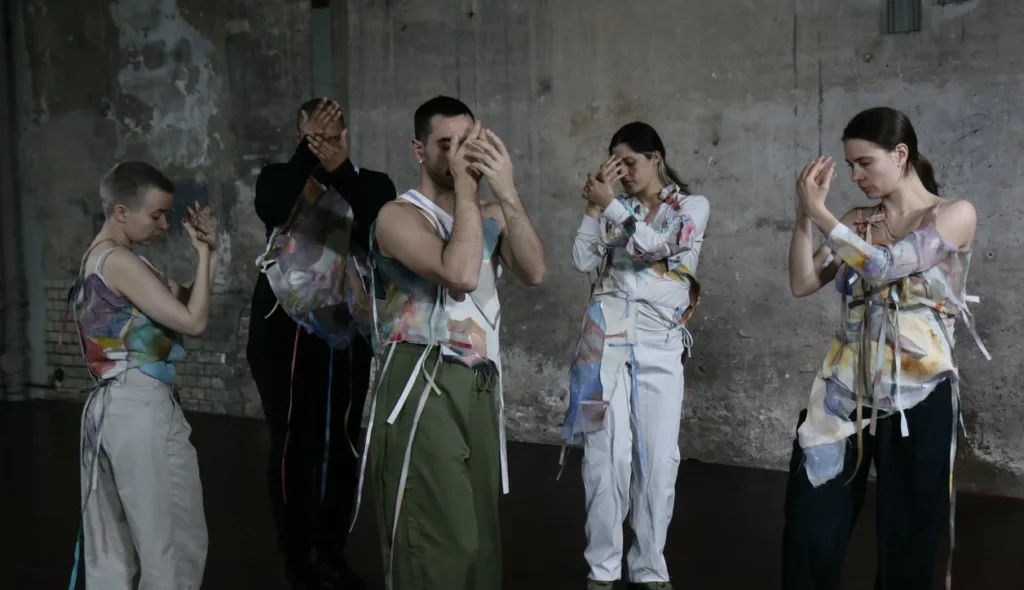
© Armin Hokmi Kiasaraei

Shiraz is a choreography for six dancers, weaving together a fabric of movements and gestures. Their insistent energy, moments of convergence and passage through ephemeral constellations are what takes center stage in this performance. A pulsating dance imbued with a sense of enchantment and longing, coiling and uncoiling to the pulsating beat of a capturing music.

The starting point for this piece is the Shiraz Arts Festival. A festival for live arts that took place between 1967 and 1977 in south of Iran and radically rethought the relationship to the audience and modalities of framing art works. Armin Hokmi, together with the team, places it into our present day in the form of a revival, by giving it a new appearance through a dance performance. Shiraz is both a homage and a fictional setting. It seeks to reimagine the ambitions of the festival and its love for the live arts, their autonomy as art forms and their common roots across geographical borders.

Shiraz is created out of a devotion to a notion of dance and choreography that emphasizes their power to ignite joy, bring about experiences of delving into sensuous worlds, and their ability to transform perception and our modes of affective engagement with live performance.
Categories
Archive

Marco da Silva Ferreira – C A R C A Ç A

November 8th – 10th, 2024 National Performing Arts Center, Taipei
November 15th – 16th, 2024 Rohm Theatre Kyoto, Kyoto
November 20th, 2024 The Museum of Art Kochi, Kochi
December 10th, 2024 Theater im Pfalzbau, Ludwigshafen
December 18th – 19th, 2024 Auditorio de Tenerife, Santa Cruz de Tenerife
January 25th, 2025 Teatro Municipal da Covilhã, Covilhã
February 1st – 2nd, 2025 Sadler’s Well, London
February 7th – 9th, 2025 Perth Festival, Perth
February 26th – 27th, 2025 Le Quartz, Brest
March 4th, 2025 Les Quinconces et L’Espal, Le Mans
March 6th – 7th, 2025 CCN de Caen, Caen
March 10th – 11th, 2025 Théâtre de Cornouaille, Quimper
March 14th, 2025 Cndc Angers, Angers

March 28th – 29th, 2025 Tanzmainz Festival, Mainz
April 2nd – 4th, 2025 La Comédie de Clermont, Clermont-Ferrand
April 8th, 2025 Théâtre de Nîmes, Nîmes

April 15th, 2025 Espaces Pluriels, Pau
April 30th – May 3rd, 2025 Danse Danse, Montreal
May 16th, 2025 Theatro Circo, Braga
July 8th – 9th, 2025 Colours International Dance Festival, Stuttgart
75 minutes

A rising Portuguese Choreographer to Follow

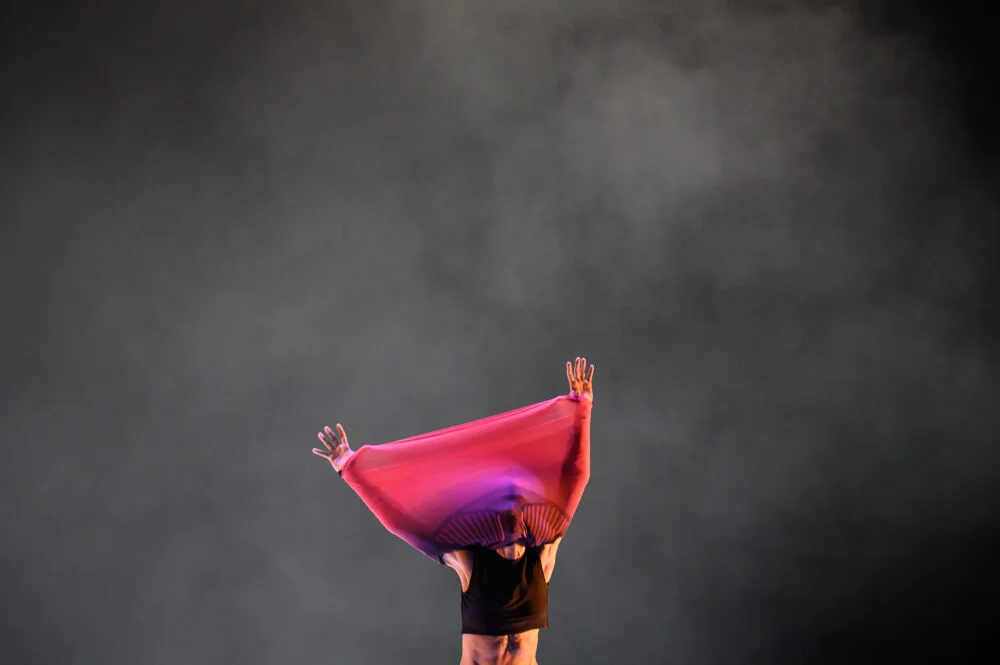
© Jose Caldeira

Collective identities are sources of belonging and inclusion but when they become mainstream, they can turn the other way around. I can recognise this issue in dance.

Marco da Silva Ferreira Interviewed by Springback Magazine

In CARCAÇA,  ten dancers including Marco da Silva Ferreira and two musicians form an unconventional and joyful corps de ballet. The dancers perform intricate footwork merging folk dances with contemporary urban dance styles from groups such as LGBTQIA+ and communities from ex-colonies. In this choreography, Marco da Silva Ferreira uses dance to investigate communities, the construction of collective identity, memory and cultural crystallization. In other words: what if folk dances had not crystallized, had continued to redefine themselves and had incorporated the present at every moment?

The cast explores their collective identity in a physical, intuitive and unpretentious flow of the body, dance and cultural construction. They start from familiar footwork: clubbing, balls, cypher battles and the studio; they use the physical vocabulary of the contemporary, social, urban context as a lexicon of identity (house, kuduro, Top Rock, hardStyle, etc.). Through a slow construction process they connect these styles with the heritage and memory of dances from the past. These folk dances have remained stagnant without integrating new definitions of bodies, groups and communities, which were considered inferior. For these groups it was necessary to break with the authoritarian, totalitarian and paternalistic past.

In CARCAÇA  an exercise is proposed that integrates the past and the present. The performance makes you think: How do you decide what to forget and what to remember? What is the role of individual identities in the construction of a community? What is the driving force of an identity? What world does the individual and collective body traverse? Or, better put, what bodies traverse the world?