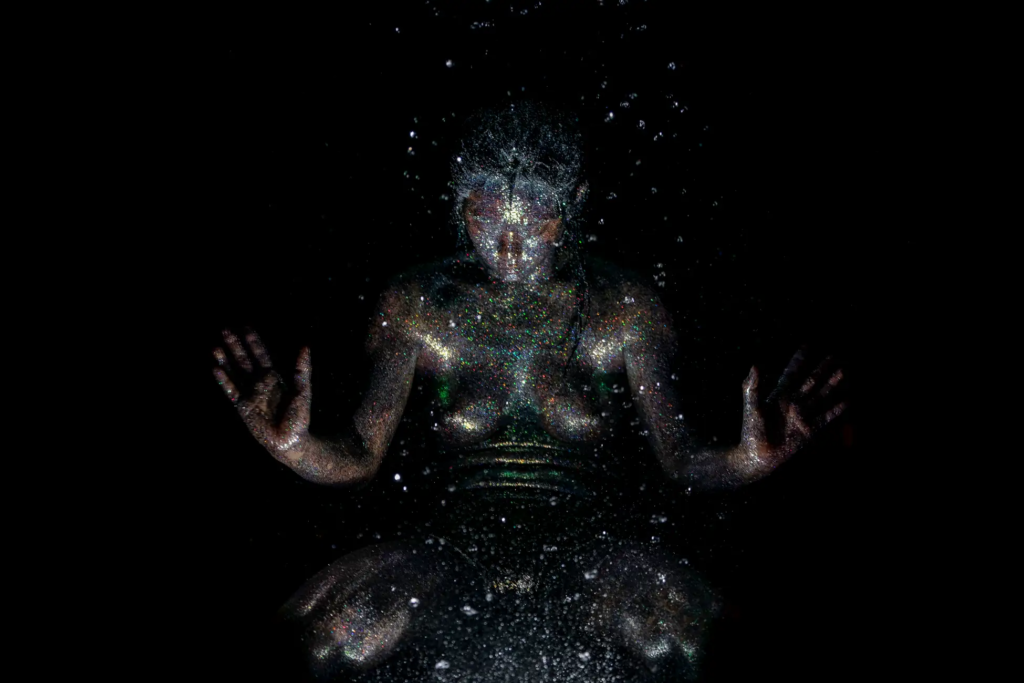
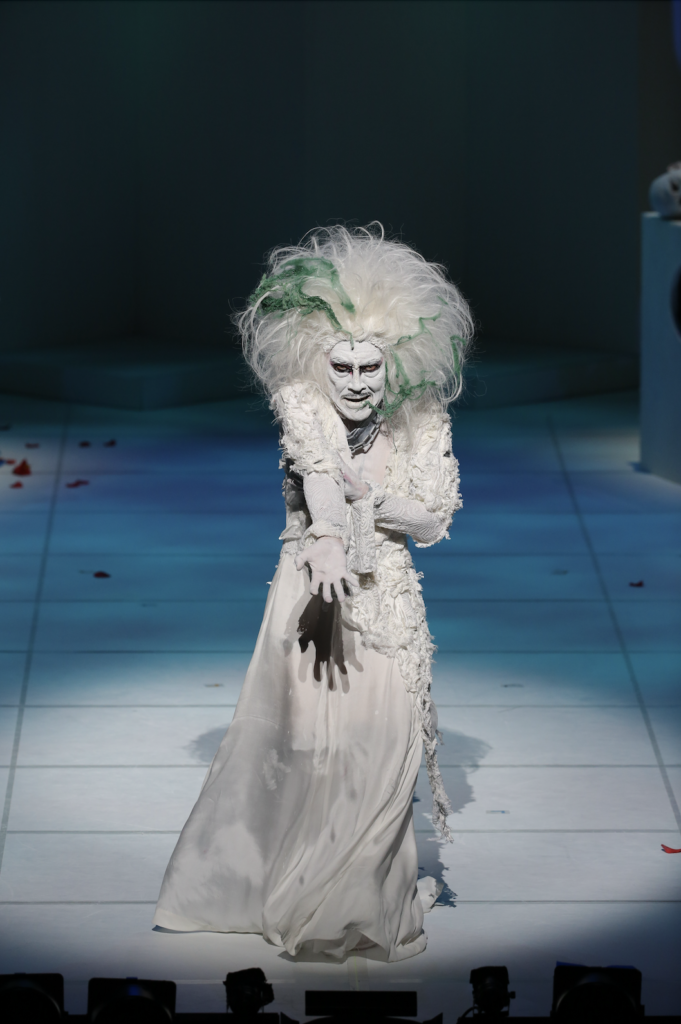
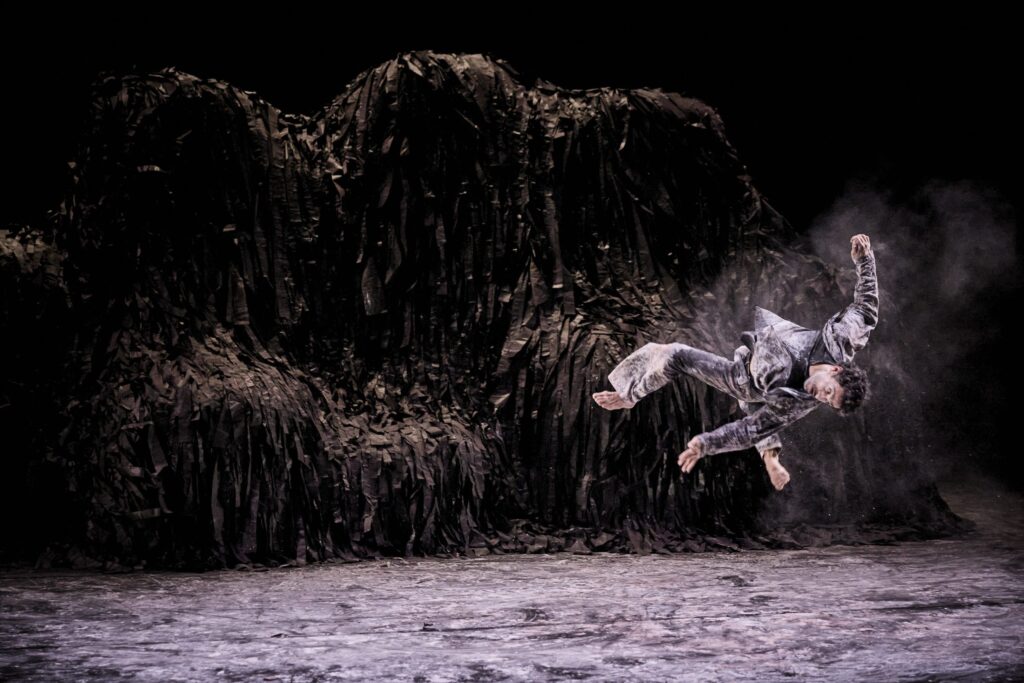
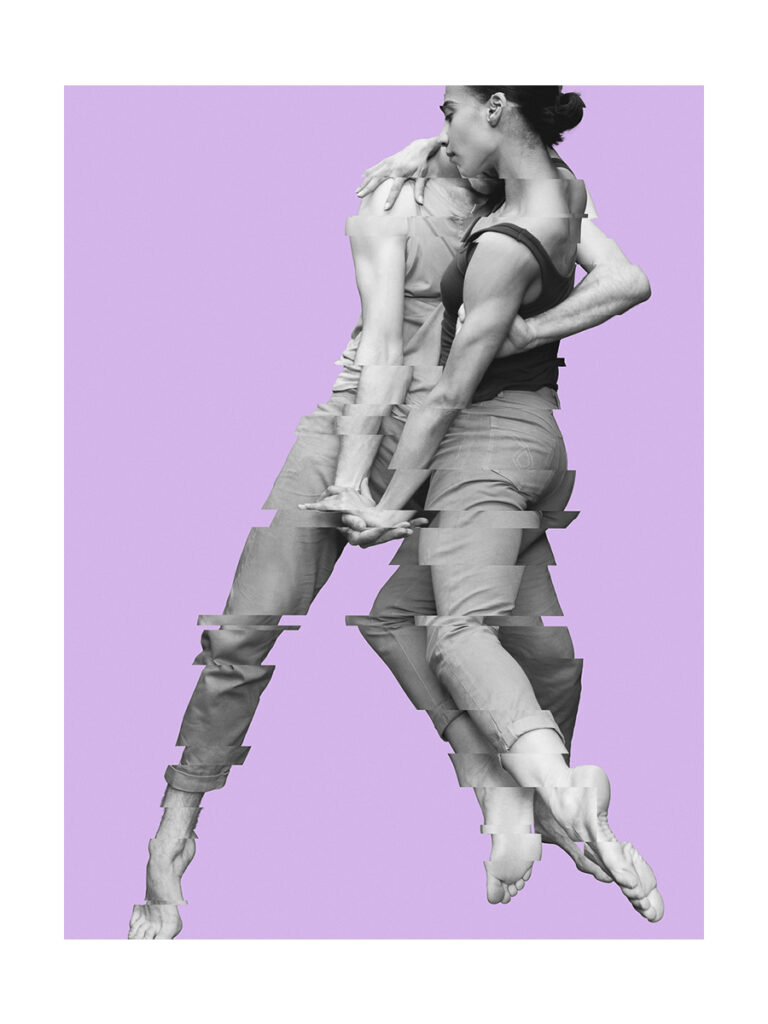
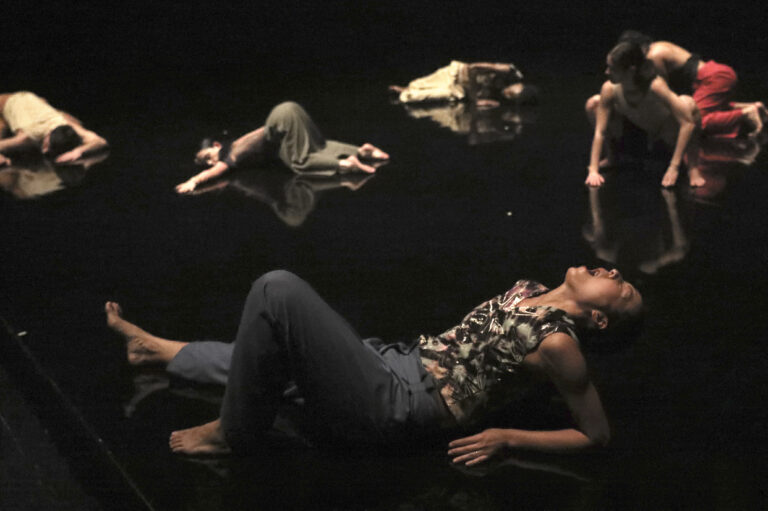
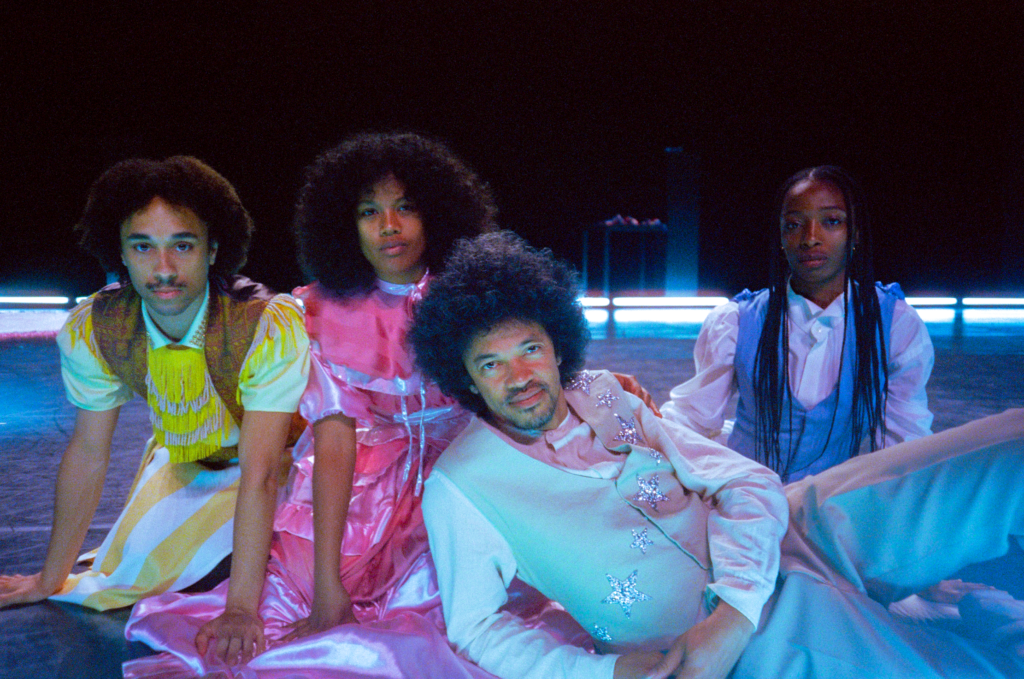
In this work, the dancers change their forms from moment to moment, just like the flickering light, the changing weather, or the evolving plants and animals. Through the interaction of these different forms, the boundaries between seemingly opposing concepts, such as life and death, the ancient and the future, as well as harmony and chaos, are explored. Eventually, the stage, where even the boundary between information and matter has become blurred, will become a place of transformation.
Damien Jalet and Kohei Nawa aim to depict the unknown landscape that lies beyond.
To mark ARTONOV’s tenth anniversary, dancer-choreographer Akaji Maro, a living butoh legend, meets virtuoso cellist Eric-Maria Couturier, soloist with the Ensemble intercontemporain, for an original performance.
Based on Johann Sebastian Bach’s Cello Suites, the butoh dancer and the musician dialogue and improvise, in a radical staging that transcends historical periods, cultural areas and artistic genres.
With a narrative based on the development of a human being, the performance explores with intensity the notions of identity, in all their ambiguity and contradictions.
A powerful and harmonious encounter between two strong, original personalities at the peak of their art.
September 26th – 28th, 2024 Teatro Argentina, Rome October 2nd – 4th, 2024 Théâtre 71, Malakoff October 11th – 12th, 2024 Théâtre de Liège, Liège October 30th – 31st, 2024 Halles de Schaerbeek, Brussels November 13th – 15th, 2024 Tandem scène nationale, Douai December 2nd – 15th, 2024 ThéâtredelaCité, Toulouse January 10th – 11th, 2025 Le Parvis scène nationale, Tarbes January 24th – February 1st, 2025 MC93, Bobigny February 18th – 22th, 2025, Comédie de Genève, Geneva 2h
An opus even more choreographic than the previous works, Qui som? , under the influence of the Spanish group Mal Pelo, could be considered the heir to Maguy Marin’s May B or Paso Doble by the duo Josef Nadj and Miquel Barceló.
Philippe Noisette
The first part of a triptych in which ceramic is both the material and the gesture of an investigation into our worlds in the making, a journey through our ways of believing and doing together, Qui som? is a wager: that dreaming is an exploratory and transformative power, an imaginary force that overflows each of us to link us to other presences, a way of orienting ourselves in obscure journeys, in secret lands. It’s a struggle. It’s alive. In colour. In clay. In plastic. In scraps and eternity.
“Our inner worlds, our intimate territories, are the breeding ground for the social landscapes to come. So if what’s to come is already here, inside our bodies, if it’s already being made inside us, we’re trying to highlight what keeps the joy, the desire, what resists, sings and dances inside us forever, to give ourselves the courage to see ourselves and not forget the worst.”
Christos Papadopoulos’ new work explores our subtle, everyday social connections, revealing the beauty within the most profound connections that often go unnoticed. Drawing from the unadorned fabric of the human experience, the choreographer illustrates the simplicity of shared moments: the unspoken understanding between friends, silent nods of solidarity among strangers, and the quiet resilience threaded through collective struggles.
A new voice for NDT, the Greek-born choreographer favours a minimalist and precise language of movement. Through small gestures that belie an intense physicality, Papadopoulos has created an ode to the power of invisible forces and transports the audience to a mysterious space in which there is neither beginning nor end.
September 26th – October 2nd, 2024 Amare, The Hague October 4th, 2024 Chassé Theater, Breda October 8th – 10th, 2024 Internationaal Theater Amsterdam, Amsterdam October 12th, 2024 Theater Rotterdam, Rotterdam October 23rd – 26th, 2024 Théâtre de la Ville, Paris November 6th – 9th, 2024 Megaron, Athens November 28th – December 1st, 2024 Amare, The Hague 35 minutes
Part of NDT 1 double-bill or triple-bille program.
Christos Papadopoulos’ new work explores our subtle, everyday social connections, revealing the beauty within the most profound connections that often go unnoticed. Drawing from the unadorned fabric of the human experience, the choreographer illustrates the simplicity of shared moments: the unspoken understanding between friends, silent nods of solidarity among strangers, and the quiet resilience threaded through collective struggles.
A new voice for NDT, the Greek-born choreographer favours a minimalist and precise language of movement. Through small gestures that belie an intense physicality, Papadopoulos has created an ode to the power of invisible forces and transports the audience to a mysterious space in which there is neither beginning nor end.
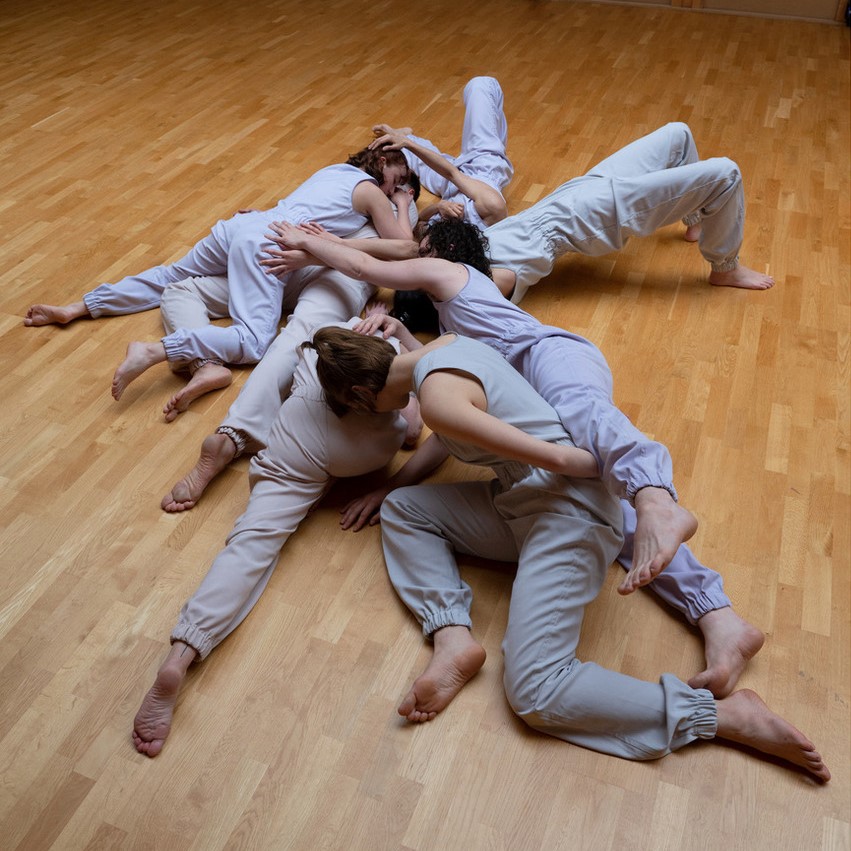
At first, the goal is to present a thick, dense, and fibrous substance by choreographing a clustering of bodies. The dancers, spread horizontally, glide on the floor and over each other. Then, to make visible the moment when, after being pressed against each other, they detach, much like their internal bodily masses gradually engage in opposite directions. They start to move apart, to differentiate, moving in opposite directions while still constantly linked. Their dance mostly unfolds on the ground. The group’s tightening and expansions allow its movement: each contraction followed by an expansion into a new space. Together, they shape pneumatic volumes, making them palpable. They unfold with determination and gentleness through the notions of direct space (moving from one point to another by the shortest path), sustained time, and lightness of weight.
Finally, the group develops a more vaporous material: the treatment of space, which was direct in the previous phase, becomes indirect (movement from one point to another is curved and sinuous). A floating quality, conducive to resonance, sets in. The seven dancers are always in contact; the group moves and changes shape, but now, it remains expansive, and the dancers invest both horizontal and vertical space. Together, they float, they wander through the meanders of a labyrinth (each one’s inner bodily space and the group’s space). Inhabited by the light and elastic roundness of sacro-cranial vibrations, their volume encompasses the labyrinth; they move through its passages, savoring the thickness of each moment, the eternity of dilated time.
September 25th – 29th, 2024 Théâtre du Rond-Point, Paris October 3rd – 4th, 2024 HAU – Hebbel am Ufer, Berlin October 19th – 20th, 2024 Staatstheater Mainz, Mainz October 31st – November 2nd, 2024 VIDY, Lausanne November 5th, 2024 L’onde – Théâtre et Center d’Art, Vélizy November 12th, 2024 teatr polski (Festival Prapremier), Bydgoszcz November 21st, 2024 Temporada Alta, Girona March 19th – 23rd, 2025 dansa metropolitana, Barcelona March 26th – 29th, 2025 Les Célestins, Lyon May 16th – 17th, 2025 FITEI, Porto May 24th, 2025 Spring Performing Arts Festival, Utrecht May 29th, 2025 Mittenmang Festival, Bremen June 4th – 7th, 2025 Rising Festival, Melbourne 90 minutes
Bringing together Bach and Miley Cyrus, she creates with “Kill Me” a complete and radical work, sometimes unsettling, sometimes subversive, but always impactful.
Olivier Frégaville-Gratian d’Amore
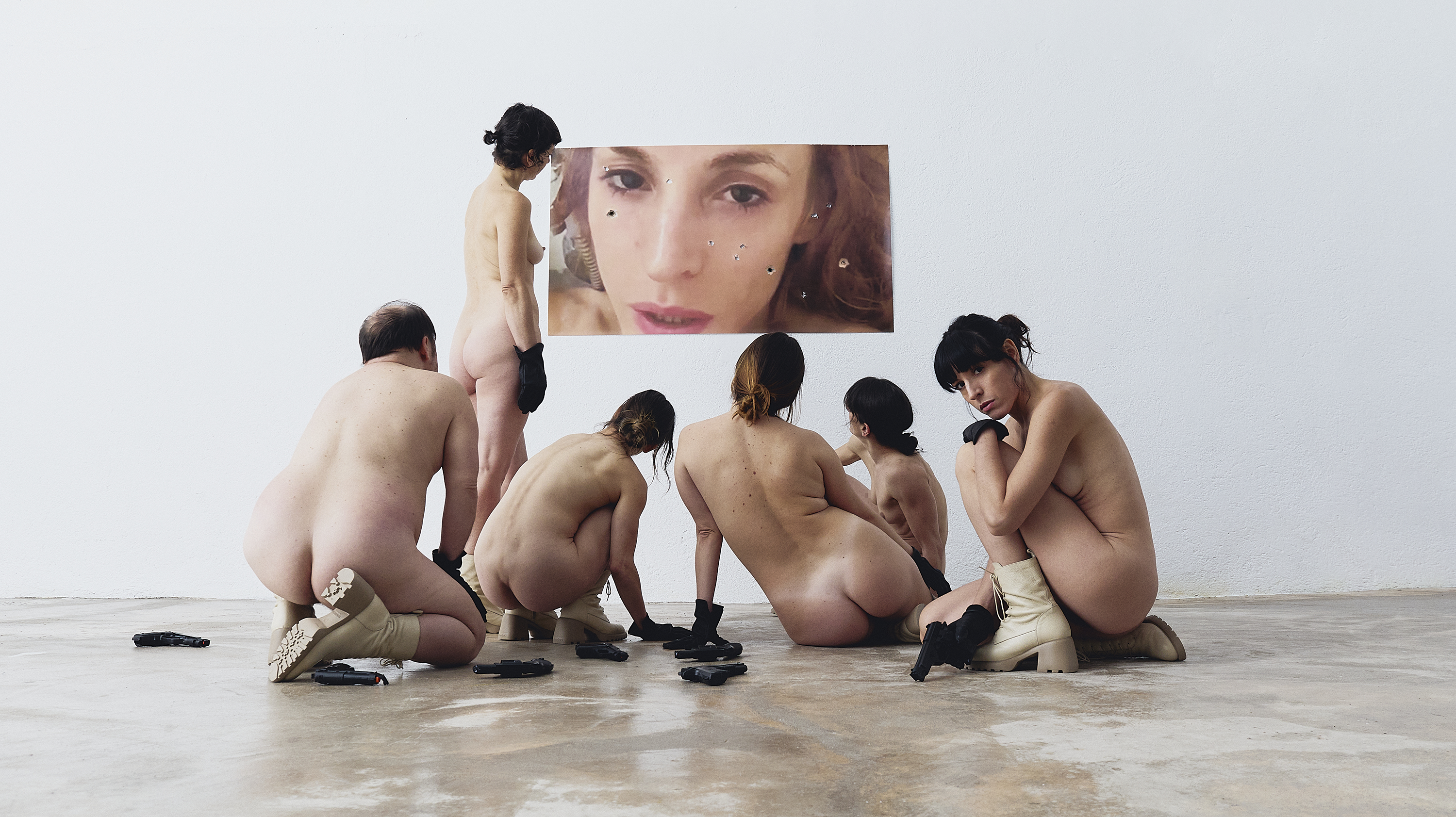
Kill me (2024) is the continuation of Love me (2022) and Fuck me (2020), in turn it is part of the project “ Remember to live ”, in which I intend to present different versions of works until the day of my death.
Entering into the cliché of the midlife crisis, I began to film everything I did: with my heart open 24 hours a day, I recorded everything.
Until one day I collapsed, I was given a psychiatric diagnosis and I decided to make my next piece out of it. I called on four dancers with mental disorders and Nijinsky, to make a piece that talks about madness for love.
But let’s say that the topic is about mental health so that it enters the inclusive agenda of the art market.
Because that is my punishment, having to make works that sell and thus stay alive in the world (of theater).
September 24th – 28th, 2024 charleroi danse / la raffinerie, Brussels October 12th – 13th, 2024 Teatro Argentina, Rome October 17th – 19th, 2024 mercat de les flors, Barcelona November 6th, 2024 Theater Rotterdam, Rotterdam November 19th – 23th, 2024 Théâtre de la Ville, Paris December 11th, 2024 Concertgebouw Brugge, Bruges December 14th, 2024 Leietheater, Deinze 90 minutes
On a selection of thirteen tracks by women, his dance spares us the illustration. Instead, it acts as a filter to enhance our listening experience.
Léa Poiré
‘Redundant.’ Or more bluntly: ‘Irritating noise.’ This is how the voice of the woman has often been considered from ancient Greek times to today.
VOICE NOISE is inspired by Anne Carson’s essay ‘The Gender of Sound’ (1992), in which she exposes how patriarchal culture has sought to silence women by ideologically associating women’s sound with monstrosity, disorder and death.
In VOICE NOISE, some innovative, unknown and/or forgotten women’s voices from the past hundred years of music history are given a stage. By doing so, Jan Martens takes another step in his efforts to shape an alternative canon.
Six dancers respond to recordings in which the human voice can be heard in various guises: humming, soothing, shrieking, whispering, singing. Gradually, they discover their own voice.
September 20th – 22nd, 2024 HAU Hebbel am Ufer, Berlin October 4th – 6th, 2024 Esplanade, Singapore October 11th – 12th, 2024 Tanzquartier Wien, Vienna March 7th – 9th, 2025 Kampnagel, Hamburg March 14th – 16th, 2025 Arsenic, Lausanne March 20th – 21st, 2025 Maillon, Strasbourg March 25th – 26th, 2025 Points Communs, Cergy March 29th, 2025 La Briqueterie, Vitry-sur-Seine May 3rd – 4th, 2025 Festival DDD, Porto May 22nd – 23rd, 2025 Spring Performing Arts Festival, Utrecht June 21st – 22nd, 2025 Festival Theaterformen, Hannover June 29th, 2025 Belluard Bollwerk Festival, Fribourg July 4th – 6th, 2025 National Arts Festival, Makhanda July 12th – 13th, 2025 Santarcangelo Festival, Santarcangelo di Romagna 80 minutes
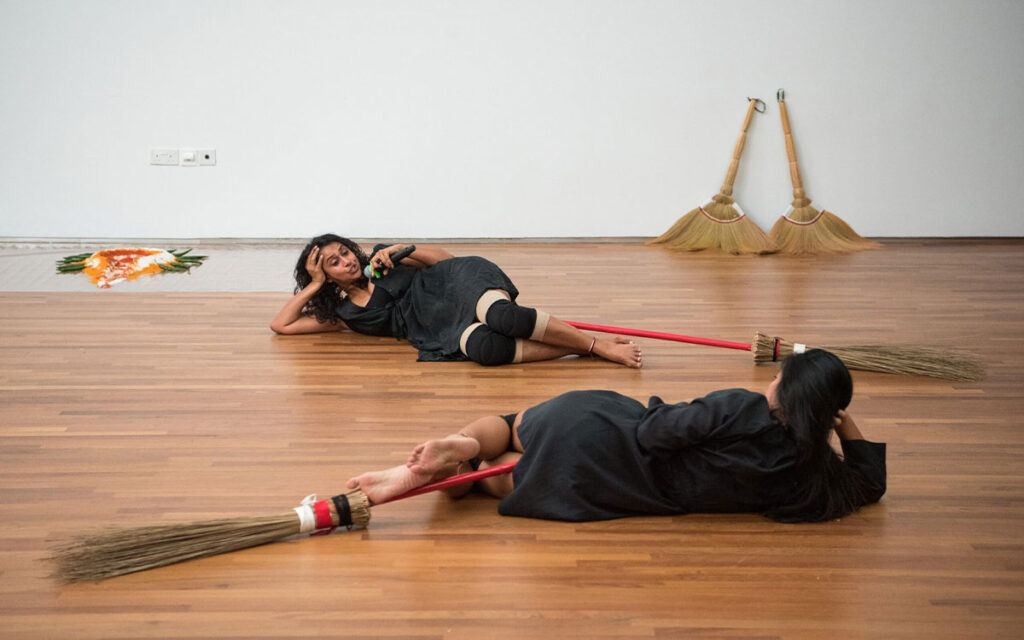
Interweaving ritual, pageantry, performance and possession, Magic Maids presents an encounter with two figures engaged in the ritual act of sweeping. The broom, a domestic tool for cleaning and the vehicle of the witch, becomes a symbol of both oppression and resistance. It is an extension of the body and a portal for metamorphosis. The art workers and their brooms exist in a continuous state of becoming.
Eisa Jocson and Venuri Perera are from the Philippines and Sri Lanka respectively, two countries known for their significant export of domestic workers. Their collaboration began in 2022 when they noticed the absence of women at Basel Museum of Pharmaceutical History in Switzerland. This observation sparked their investigation of the historical persecution of witches; in Europe and its implications for the exploitation of female labour in colonised regions. They discovered that the accusation of witchcraft continues to be a tool for persecuting migrant workers from the Global South.
Magic Maids is a bodily response to their grappling with these complex entanglements. They call upon practices of incantation and intention, using their bodies to traverse multiple territories: physical, conceptual, transnational, emotional, and gendered. The labour in performance enables an embodied inquiry into questions of representation, political subjecthood and histories of oppression. Having individually presented solo work across international festivals and platforms that follows this line of inquiry, Jocson and Perera come together for the first time to sweep out and unsettle oppressive power structures. Rewilding the domestic, they aim to release, reclaim, rejoice, and reconnect with the primal energies.
Magic Maids is an invitation to witness and reflect on the visibility of the working body, the power of female solidarity, and the enduring impact of historical injustices on modern labour practices.
September 18th – 22nd, 2024 MC93, Bobigny October 3rd – 4th, 2024 Ballet national de Marseille, Marseille November 20th, 2024 La Manufacture CDCN Nouvelle-Aquitaine, Bordeaux December 10th, 2024 Théâtre d’Orléans, Orléans 90 minutes
Fampitaha, fampita, fampitàna – three Malagasy words that mean comparison, transmission and rivalry. In a score of abstract and figurative gestures, dancer and choreographer Soa Ratsifandrihana makes use of her own experience of diaspora and her Madagascan origins to tell us the kind of story she would have liked to have heard or seen as a child. Blending radio, musical and choreographic storytelling, the show plays with orality and movement, reminding us that our bodies, just like our words and sounds, are bearers of stories. Ratsifandrihana – who came to attention as a dancer in Rosas’ new version of Fase – drew inspiration from the words and stories she picked up on a recent trip to Madagascar. Joined by guitarist Joël Rabesolo and performers Audrey Merilus and Stanley Ollivier, she travels towards a form of wandering, exploring how several influences can lead to an unheard-of explosion of cultures like creolisation. Just as the change in accentuation between ‘fampitaha’, ‘fampita’ and ‘fampitàna’ alters the word’s meaning, the dancers glide from one state to another, seemingly following a constantly changing movement – or perhaps a form of creolisation.