October 15th – 18th, 2025 Théâtre Silvia Monfort, Paris November 6th – 7th, 2025 Châteauvallon-Liberté, Toulon December 16th – 17th, 2025 Théâtres de la Ville de Luxembourg, Luxembourg 60 minutes
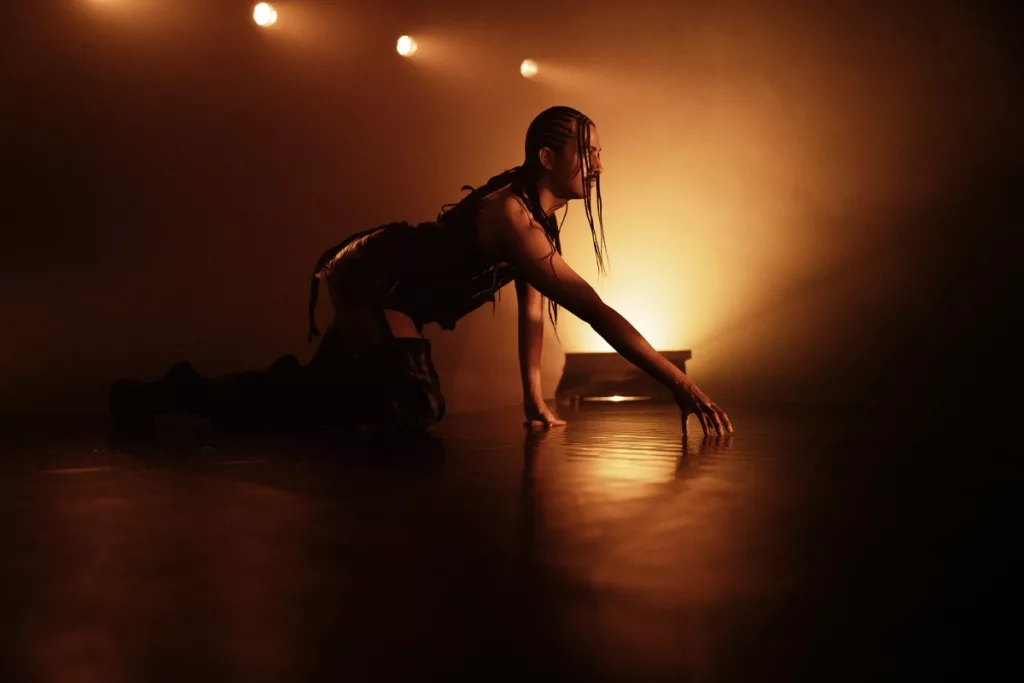
In an era dominated by technological advancement and artificial intelligence, Nawal Aït Benalla’s new creation, Ce qui nous traverse, presents a powerful return to human connection through movement.
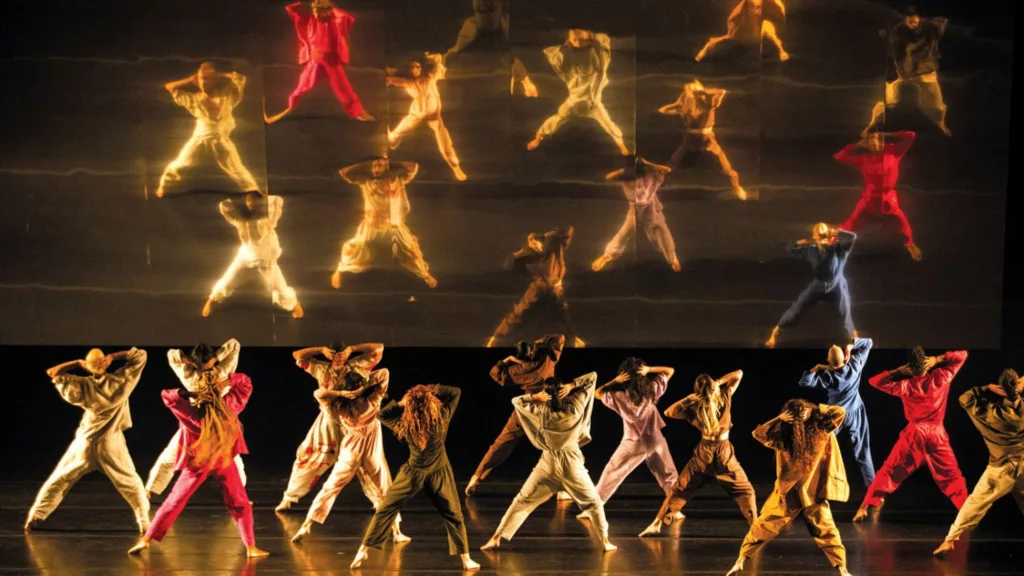
Five dancers with distinct physiques explore the raw power of the human body as a universal language within an intimate setting, engaging in metronomic, repetitive movements that evolve into a controlled, trance-like state.
Through elaborate choreography and striking contrasts – sudden accelerations, decelerations, and moments of near stillness – Benalla questions our relationship with our bodies and physical connection in shared space. The piece aims to highlight our corporeal forms as powerful instruments, capable of connecting us all and transcending divisions of class, culture, and education.
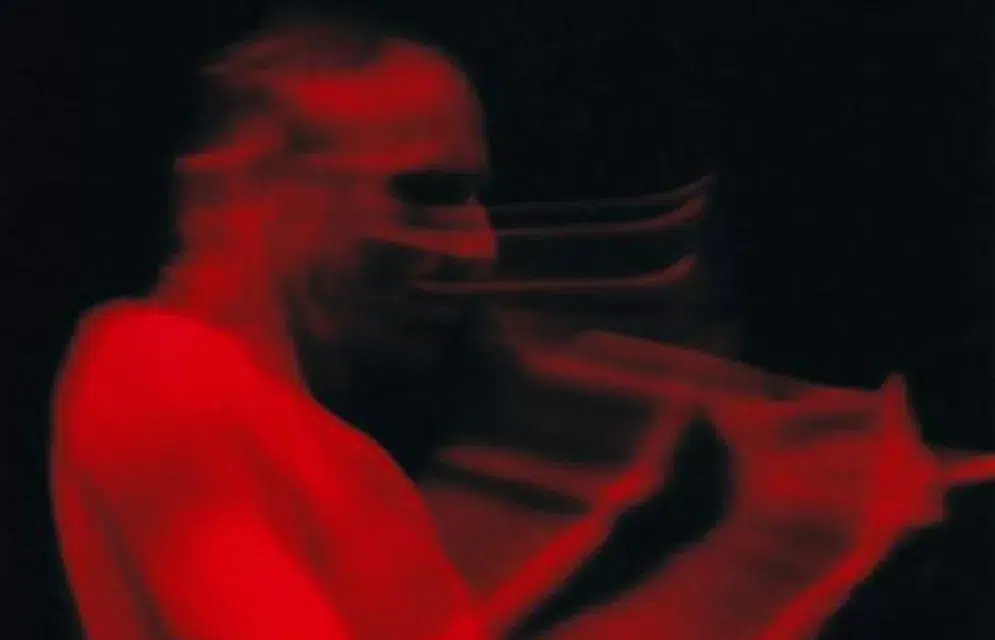
On October 10 and 11 you can watch RESONANCE, the first NDT 1 programme of the season, as a livestream from the comfort of your living room. Experience Jiří Kylián’s Mémoires d’Oubliettes (2009) up close, find yourself right in the middle of Crystal Pite’s satirical boardroom drama The Statement (2016), and be moved by Marco Goecke’s emotional Woke up Blind (2016), set to the music of Jeff Buckley.
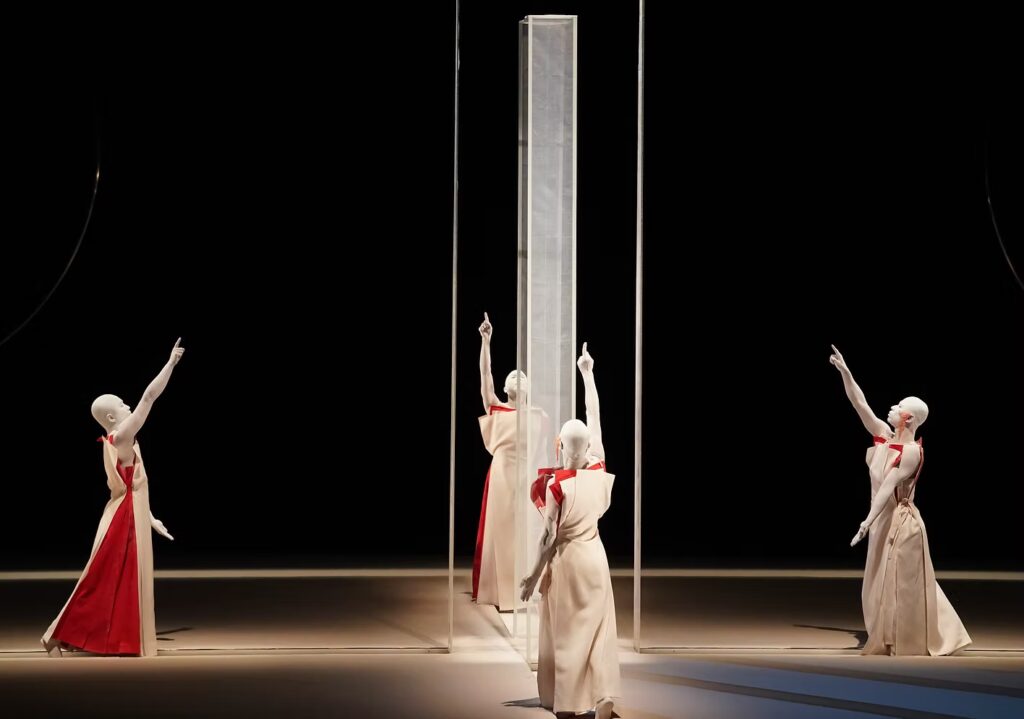
The eponymous totem rises at the exact center of the stage, above four rectangular spaces that divide the floor into perfect quarters. Tall and striking, it is formed from three “pillars”, the central one capped with a small, inverted pyramid whose sharp tip points downward. Behind it, two large metal hoops sweep across the background, slowly traversing the space until they meet in the finale.
Into this simple yet exquisitely arranged setting enter four figures—shaved heads, white-painted faces, and matching ceremonial costumes of white and red. They move slowly, with quiet dignity, to take their places. Once aligned, they begin a dance in which two truths are immediately clear: the four become one, and the totem stands as the ritual’s unwavering focal point. Thus begins an extraordinary performance.
Ushio Amagatsu—the legendary founder of Sankai Juku, and the conceptualizer, director, and choreographer of the piece—explained: “There are several definitions of a totem. It can be a specific object serving as a sign or symbol of a group, tribe, or blood relation; sometimes it can be a wild animal or plant. The subtitle «Void and Height» refers to a work by stage artist Natsuyuki Nakanishi. It evokes the space that rises between four places.”
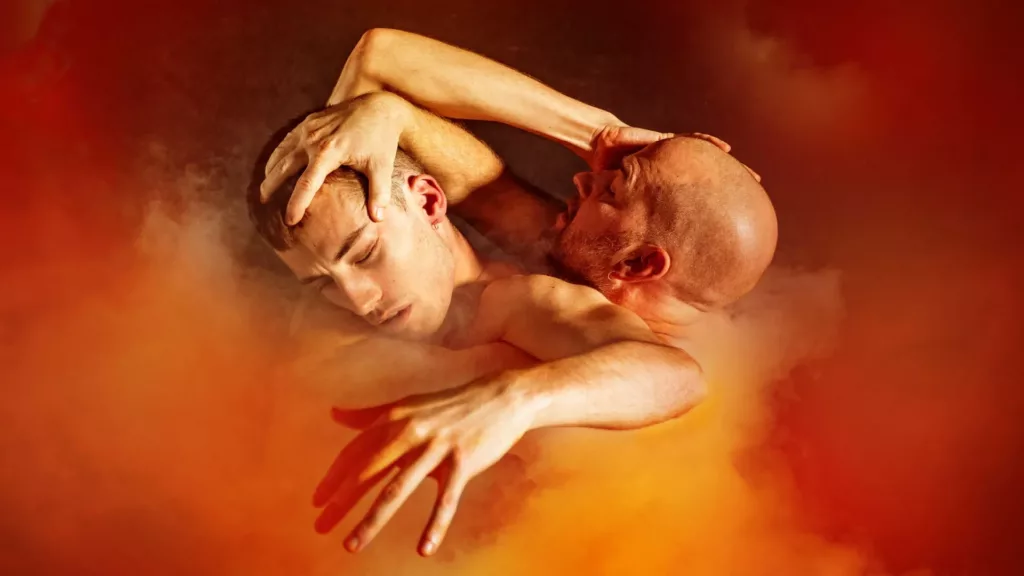
A man steps out for air. Another is already there. One talks too much. One doesn’t say enough.
What begins as small talk quickly spirals into a volatile game of dominance.
Set entirely within a transparent glass box, HOW ABOUT NOW is a claustrophobic encounter – two people testing what can be said, what can be taken back. Around them, the air thickens: a mind, a digital void, a confessional, where truths distort, and intimacy curdles into threat.
Inspired by Max Frisch’s The Arsonists – a parable of denial and complicity in the face of quiet catastrophe – While Frisch asks how fascism is allowed into the home under the guise of civility and denial, this production transposes societal unease into a more intimate crisis: the erosion of connection, trust, and self-awareness.
Inspired by graffiti saying “Art will save the world”, Eggermont invites young people to share memories, poems, and references. These fragments form a time capsule, portraying a generation in search of meaning. Through his gestural language and music, Eggermont’s dance becomes a refuge, affirming art as a force for resilience and renewal in troubled times.
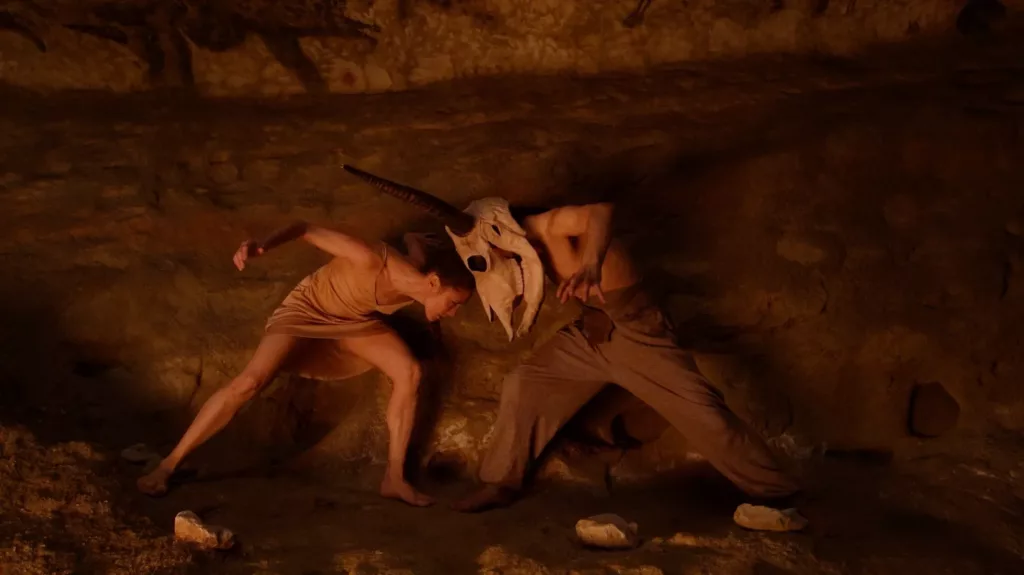
Created by Daniel Proietto, Hidden is a journey to the origins of art, myth and human consciousness. Blending film with live dance and music, the performance was first developed for the monumental spaces of Lascaux IV (International Centre for Parietal Art) and conceived to unfold across architectural and natural environments — evoking a ritual space of presence and ancestral memory.
Performed by acclaimed ballerina Yolanda Correa and Daniel Proietto, the work embodies themes of birth, life, and mortality. It merges myth, movement, and deep time — inviting reflection on what endures in us, what must be reclaimed, and what we carry forward.
Originally created as a commission for Lascaux IV, Hidden was developed in dialogue with Snøhetta, the Norwegian National Opera & Ballet, and KNOW NATION. It now appears in a new spatial adaptation for the Artonov Festival, with the Tana Quartet performing music by Belgian composer Jean-Paul Dessy (b. 1963), whose work blends contemporary classical language with a spiritual dimension — resonating with Hidden’s vision of art as presence and offering.
The São Paulo City Ballet presents a European tour with remarkable choreographies such as ‘Boca Abissal’, ‘Fôlego’ and ‘Réquiem SP’, signed by renowned Rafaela Sahyoun and Alejandro Ahmed.
Rafaela Sahyoun
Rafaela Sahyoun is a Latin American dance artist from São Paulo, currently based between Brazil and Portugal. She spirals through the intertwined roles of being a dancer, a young choreographer, and a teacher. She is fascinated by the ever-evolving landscape of performative practices, community, and context. She dedicates herself to artistic and pedagogical projects that unfold and shape-shift continuously through ongoing research and shared practices.
Actively collaborating with artists, researchers, students, and art institutions in Brazil and abroad, she has a strong inclination toward hybrid formats of collaboration in dialogues with multidisciplinary disciplines. Her most recent choreographic work, Fôlego (2022), was commissioned by São Paulo City Ballet (Balé da Cidade de São Paulo, BCSP) in partnership with São Paulo Cultural Centre (Centro Cultural de São Paulo, CCSP) and had its 2023 season at São Paulo Municipal Theatre (Theatro Municipal de São Paulo).
Alejandro Ahmed
Winner of three APCA (São Paulo Association of Art Critics) awards, as well as the Funarte Petrobras Dance Promotion Award, Bravo! Prime Award for Culture, and the Sergio Motta Art and Technology Award, Alejandro Ahmed is one of the most important choreographers in contemporary Brazilian dance. Born in Montevideo, Uruguay, he moved with his family to Florianópolis, Brazil, at the age of three, where he began dancing at just twelve.
As a guest of the São Paulo City Ballet in 2022, he conceived and choreographed a piece by the American avant-garde composer John Cage, written in the early 1990s, resulting in the performance “Sixty Eight in Axys Atlas.” Alejandro Ahmed now returns to his partnership with the São Paulo Municipal Ballet, this time as artistic director of the São Paulo City Ballet.
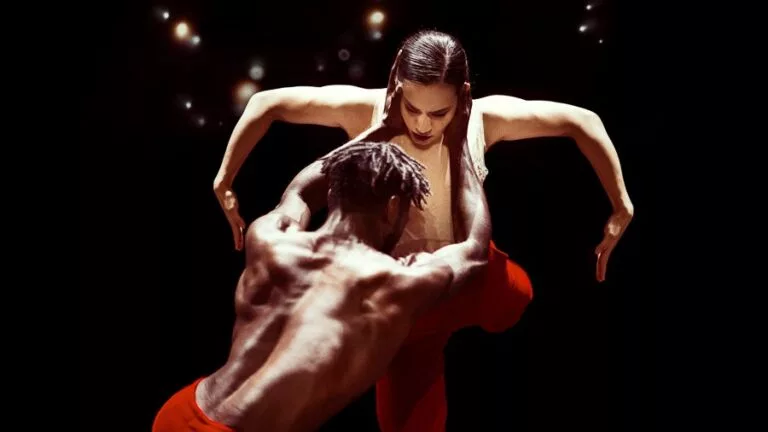
The Fridas is a duet inspired by the painting “The Two Fridas” by Frida Kahlo. It explores the complex theme of human identity through a relationship of complicity and contrast between two dancers. Specular and divergent movements embody internal conflicts and harmony. At the same time physical expressiveness and the use of space (in the Komoco language considered as a living element capable of uniting and dividing), represent two complementary and essential elements in the research.
Designed for theatrical but also unconventional and museum spaces, The Fridas lends itself to being observed from different perspectives, thus adding nuances to the research into the human essence and celebrating its complexity. The ending, however, suggests an ironic acceptance of the chaos of life: through parodic movements the dancers find in humor the balm to continue facing the challenges of existence.
August 23rd, 2025 Norrlandsoperan, Umeå August 25th, 2025 Gävle Teater, Gävle August 28th, 2025 Folkets Hus, Säter August 30th, 2025 Dansnät Jönköping, Jönköping September 2nd, 2025 Dansstationen, Malmö September 4th, 2025 Dansscen Örebro, Örebro September 6th, 2025 Festival Platforma, Maribor October 12th, 2025 Hanzas Perons, Rīga 50 minutes
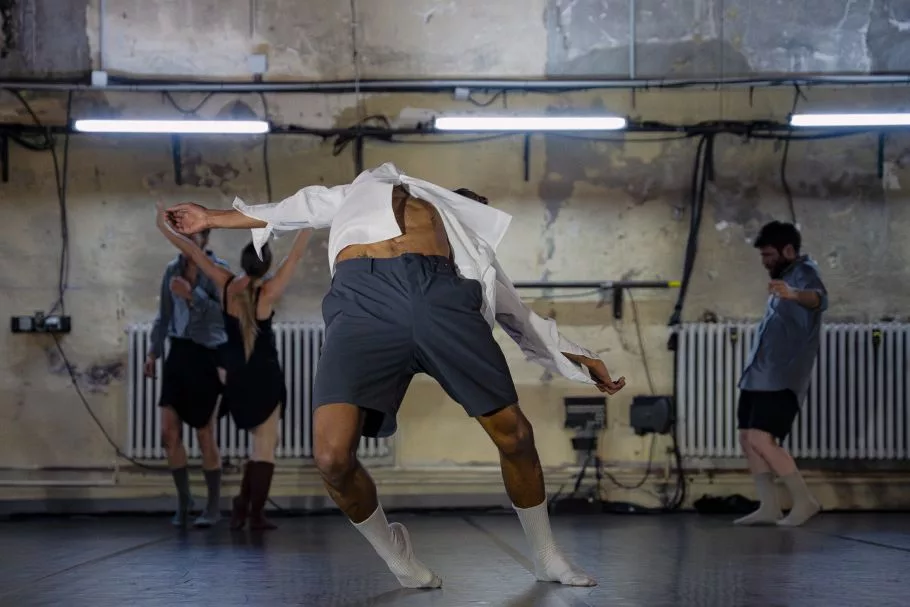
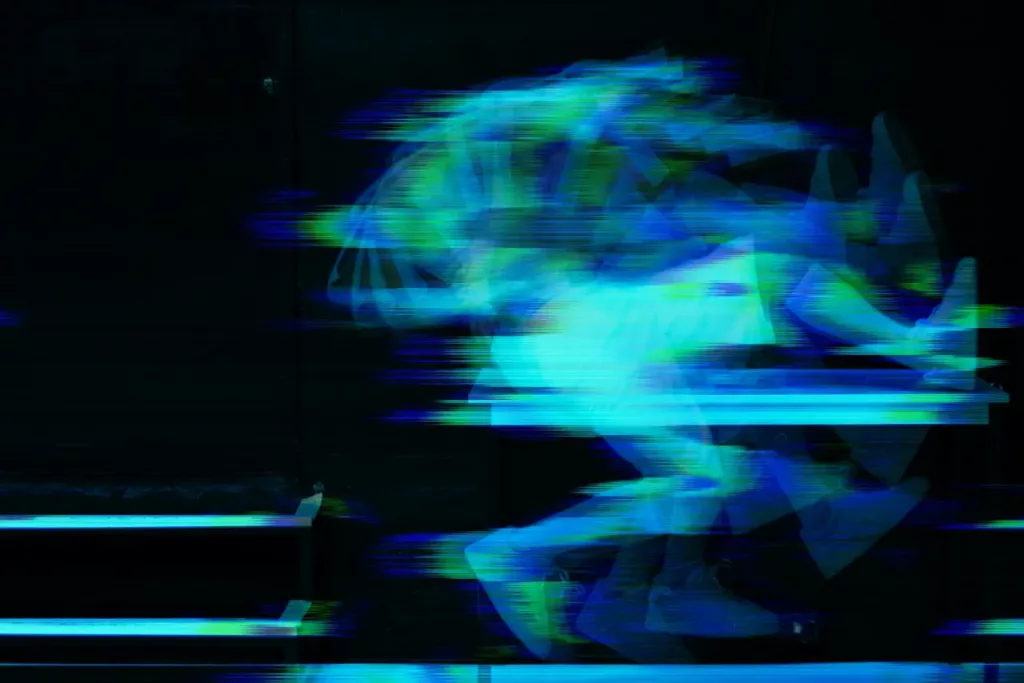
Vērpete (vortex, whirl), the creators-performers Erik Eriksson and Krišjānis Sants take the principle of a turning couple – a movement that is more familiar in games, folk and ballroom dancing – as a starting point and develop it into a dance of precision, speed, trust and exhilaration. As they vortex through the space, turning hand in hand, the performers bring the audience together and take part in dynamic patterns of repetition. The dancers create a paradox by committing to support one another through opposition, collaborating by constantly pulling apart. Vērpete is accompanied by live music of vibraphone and guitar, creating a dense and embracing soundscape, performed by Mārtiņš Miļevskis and Rihards Lībietis.
The audience shares the same space as performers and many have described their experience as if finding themselves in the midst of a natural force, perceived first by the body and then by the mind.
Puff explores the concept of “disguise” as a recurring element in dances of the African diaspora—an element that transmits silenced cultures by concealing techniques, messages, traditions, or ancestral knowledge. The work explores the development of footwork techniques such as extremely rapid steps and the dissociation of body parts, which create illusions and suggest that something is being deliberately hidden from view. Puff—a light breath—also carries, in Portuguese, the meaning of something that vanishes as if by magic.
This solo performance marks a continuation of the long-standing collaboration between Alice Ripoll and Hiltinho Fantástico, who have been working together for the past seven years within the SUAVE and REC dance companies. Both collectives develop a hybrid language that merges contemporary dance with Brazilian urban forms. The two artists have collaborated in acclaimed works such as Cria, Lavagem, aCORdo, and Zona Franca, which have toured major festivals and theaters around the world.