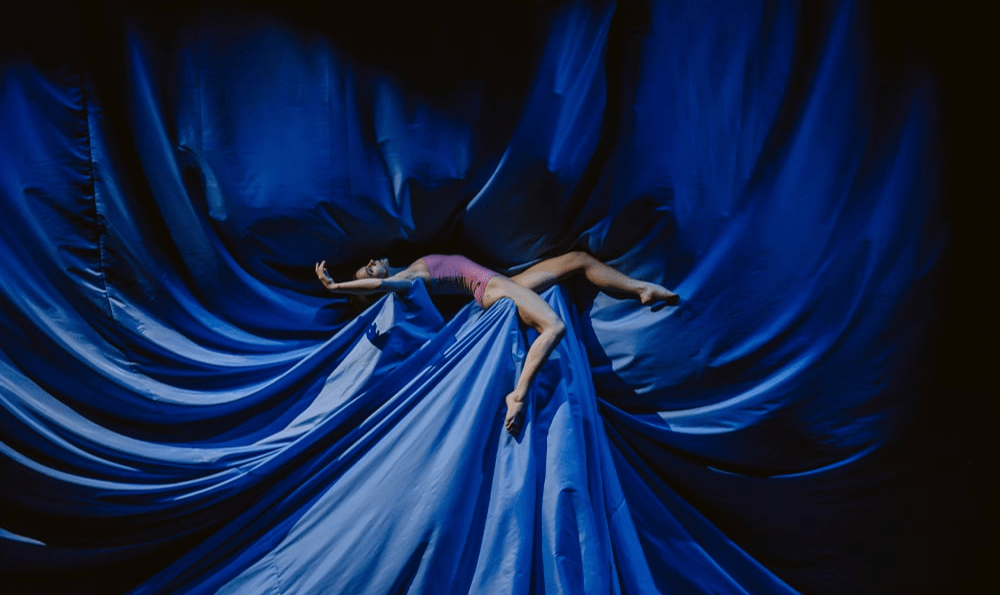
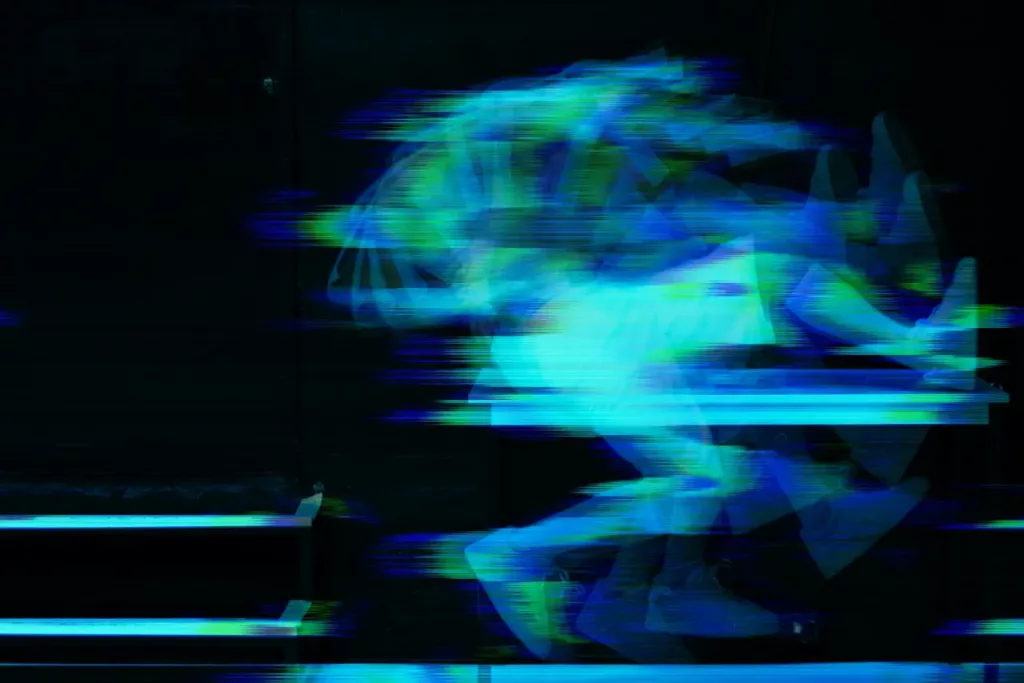
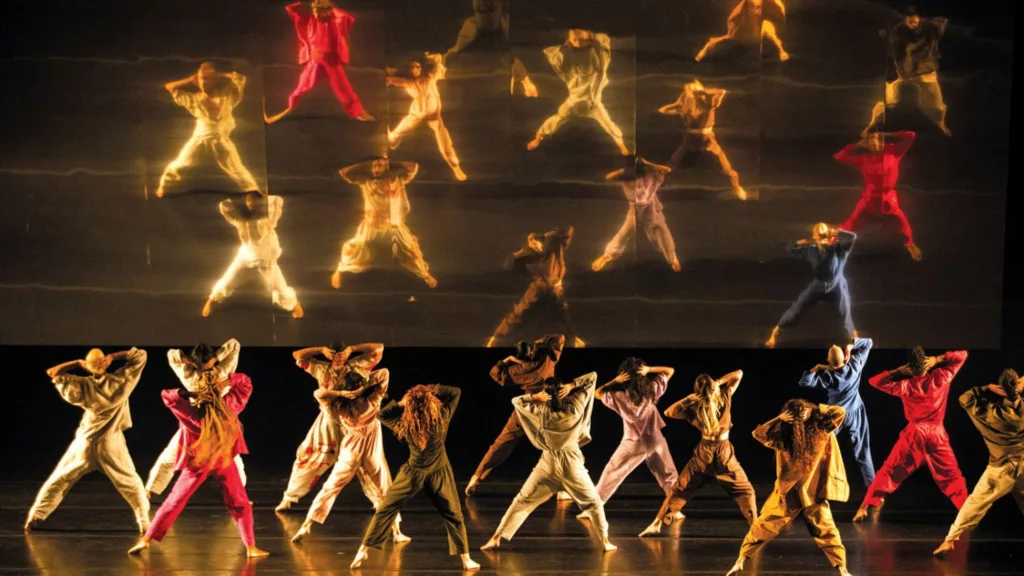
Created by choreographer Guillaume Côté and stage director Robert Lepage, Hamlet, Prince of Denmark pulls the audience deep into a world of deceptiveness, where phantoms and humans mingle on a minimalist set where light, shadow and transparency play a central role.
This metaphorical reinterpretation of the Shakespearian drama draws a fine line connecting movements of the body with what may or may not be lurking within the corners of the mind.
On October 10 and 11 you can watch RESONANCE, the first NDT 1 programme of the season, as a livestream from the comfort of your living room. Experience Jiří Kylián’s Mémoires d’Oubliettes (2009) up close, find yourself right in the middle of Crystal Pite’s satirical boardroom drama The Statement (2016), and be moved by Marco Goecke’s emotional Woke up Blind (2016), set to the music of Jeff Buckley.
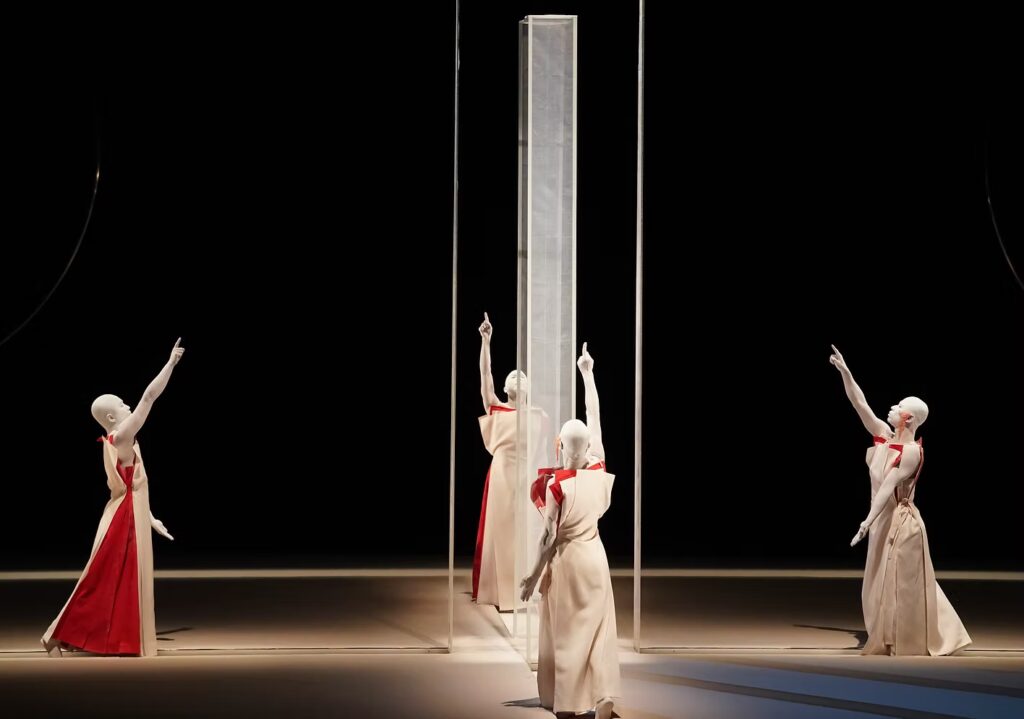
The eponymous totem rises at the exact center of the stage, above four rectangular spaces that divide the floor into perfect quarters. Tall and striking, it is formed from three “pillars”, the central one capped with a small, inverted pyramid whose sharp tip points downward. Behind it, two large metal hoops sweep across the background, slowly traversing the space until they meet in the finale.
Into this simple yet exquisitely arranged setting enter four figures—shaved heads, white-painted faces, and matching ceremonial costumes of white and red. They move slowly, with quiet dignity, to take their places. Once aligned, they begin a dance in which two truths are immediately clear: the four become one, and the totem stands as the ritual’s unwavering focal point. Thus begins an extraordinary performance.
Ushio Amagatsu—the legendary founder of Sankai Juku, and the conceptualizer, director, and choreographer of the piece—explained: “There are several definitions of a totem. It can be a specific object serving as a sign or symbol of a group, tribe, or blood relation; sometimes it can be a wild animal or plant. The subtitle «Void and Height» refers to a work by stage artist Natsuyuki Nakanishi. It evokes the space that rises between four places.”
A man steps out for air. Another is already there. One talks too much. One doesn’t say enough.
What begins as small talk quickly spirals into a volatile game of dominance.
Set entirely within a transparent glass box, HOW ABOUT NOW is a claustrophobic encounter – two people testing what can be said, what can be taken back. Around them, the air thickens: a mind, a digital void, a confessional, where truths distort, and intimacy curdles into threat.
Inspired by Max Frisch’s The Arsonists – a parable of denial and complicity in the face of quiet catastrophe – While Frisch asks how fascism is allowed into the home under the guise of civility and denial, this production transposes societal unease into a more intimate crisis: the erosion of connection, trust, and self-awareness.
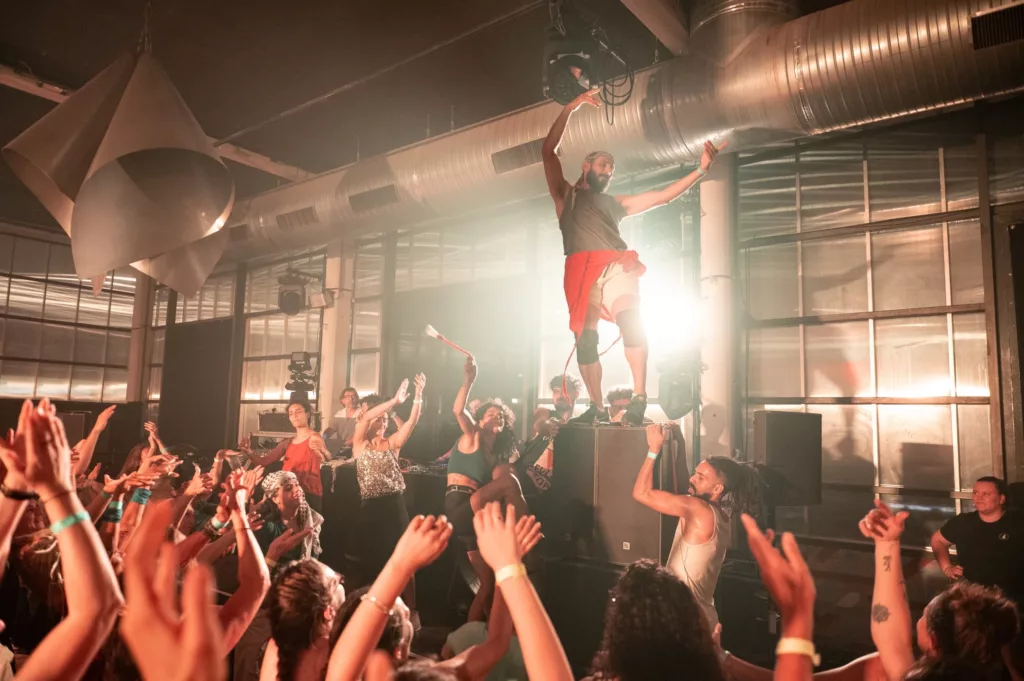
TARAB is a participatory piece for 6 dancers, 1 live-act composer and 100 ‘accomplices’.
Choreographer Eric Minh Cuong Castaing invites us to a participatory celebration, under the guidance of artists from the countries of the Levant. He invites musician Rayess Bek and six dancers from the Palestinian, Lebanese and Egyptian diasporas, invoking the lively rhythms and dances of the Levant. For several hours, amateur dancers will rub shoulders with the professionals on stage, guided by choreographic protocols.
The dabke, a folk dance from the Levant, will take pride of place, in a game of transmission and shared joy.
Inspired by graffiti saying “Art will save the world”, Eggermont invites young people to share memories, poems, and references. These fragments form a time capsule, portraying a generation in search of meaning. Through his gestural language and music, Eggermont’s dance becomes a refuge, affirming art as a force for resilience and renewal in troubled times.
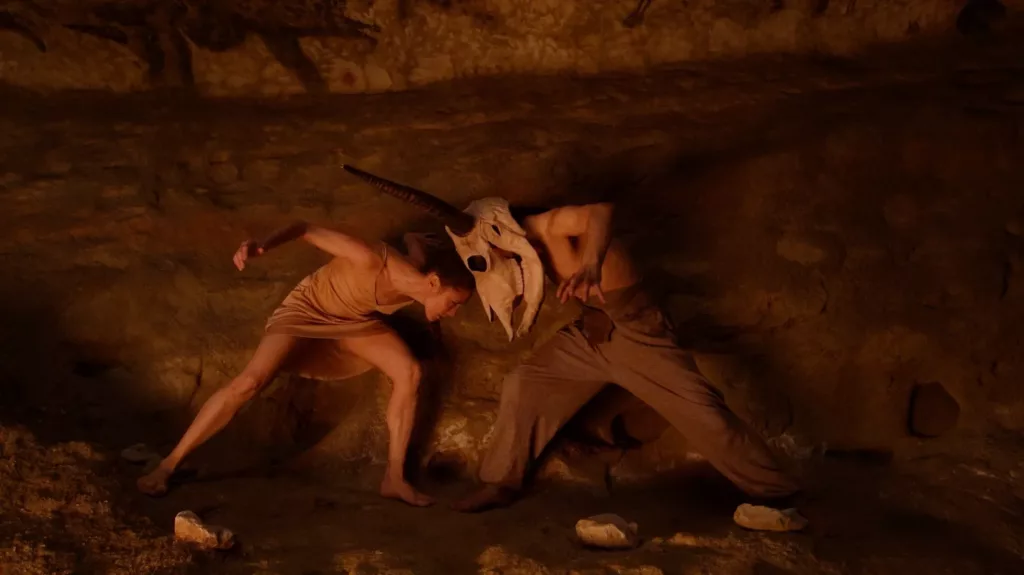
Created by Daniel Proietto, Hidden is a journey to the origins of art, myth and human consciousness. Blending film with live dance and music, the performance was first developed for the monumental spaces of Lascaux IV (International Centre for Parietal Art) and conceived to unfold across architectural and natural environments — evoking a ritual space of presence and ancestral memory.
Performed by acclaimed ballerina Yolanda Correa and Daniel Proietto, the work embodies themes of birth, life, and mortality. It merges myth, movement, and deep time — inviting reflection on what endures in us, what must be reclaimed, and what we carry forward.
Originally created as a commission for Lascaux IV, Hidden was developed in dialogue with Snøhetta, the Norwegian National Opera & Ballet, and KNOW NATION. It now appears in a new spatial adaptation for the Artonov Festival, with the Tana Quartet performing music by Belgian composer Jean-Paul Dessy (b. 1963), whose work blends contemporary classical language with a spiritual dimension — resonating with Hidden’s vision of art as presence and offering.
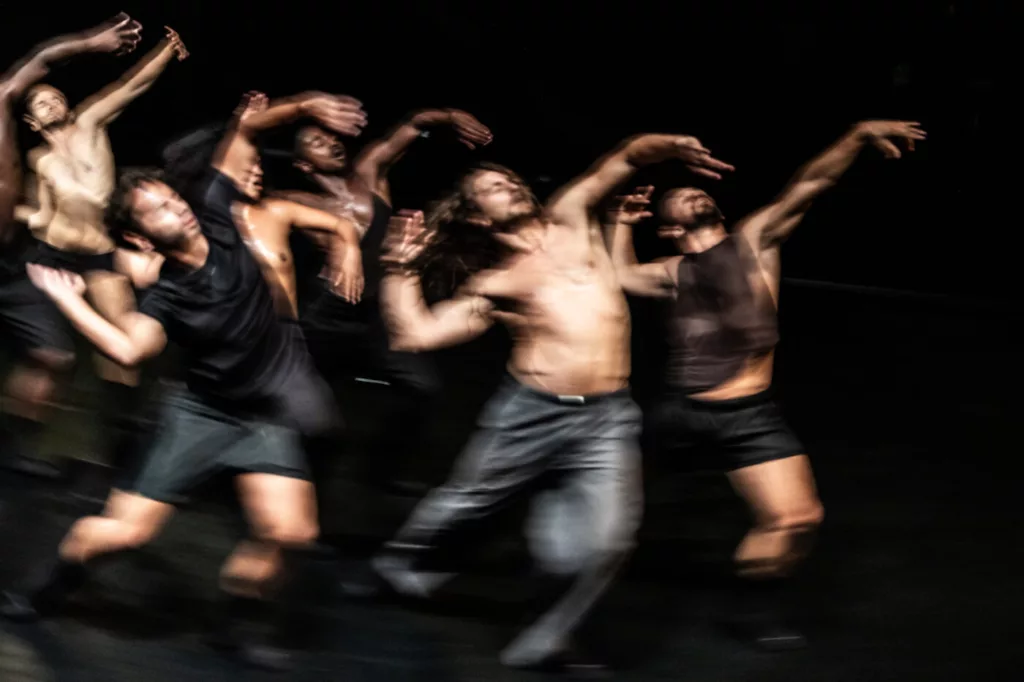
F*cking Future searches the friction between militancy and militarization, exploring and challenging the systems that shape bodies and behaviors. On a quadrifrontal stage, drawing from those very same systems, a collective marches between rigidity and dilution, discipline and desire, invoking new forms of union and insurgency.
The São Paulo City Ballet presents a European tour with remarkable choreographies such as ‘Boca Abissal’, ‘Fôlego’ and ‘Réquiem SP’, signed by renowned Rafaela Sahyoun and Alejandro Ahmed.
Rafaela Sahyoun
Rafaela Sahyoun is a Latin American dance artist from São Paulo, currently based between Brazil and Portugal. She spirals through the intertwined roles of being a dancer, a young choreographer, and a teacher. She is fascinated by the ever-evolving landscape of performative practices, community, and context. She dedicates herself to artistic and pedagogical projects that unfold and shape-shift continuously through ongoing research and shared practices.
Actively collaborating with artists, researchers, students, and art institutions in Brazil and abroad, she has a strong inclination toward hybrid formats of collaboration in dialogues with multidisciplinary disciplines. Her most recent choreographic work, Fôlego (2022), was commissioned by São Paulo City Ballet (Balé da Cidade de São Paulo, BCSP) in partnership with São Paulo Cultural Centre (Centro Cultural de São Paulo, CCSP) and had its 2023 season at São Paulo Municipal Theatre (Theatro Municipal de São Paulo).
Alejandro Ahmed
Winner of three APCA (São Paulo Association of Art Critics) awards, as well as the Funarte Petrobras Dance Promotion Award, Bravo! Prime Award for Culture, and the Sergio Motta Art and Technology Award, Alejandro Ahmed is one of the most important choreographers in contemporary Brazilian dance. Born in Montevideo, Uruguay, he moved with his family to Florianópolis, Brazil, at the age of three, where he began dancing at just twelve.
As a guest of the São Paulo City Ballet in 2022, he conceived and choreographed a piece by the American avant-garde composer John Cage, written in the early 1990s, resulting in the performance “Sixty Eight in Axys Atlas.” Alejandro Ahmed now returns to his partnership with the São Paulo Municipal Ballet, this time as artistic director of the São Paulo City Ballet.
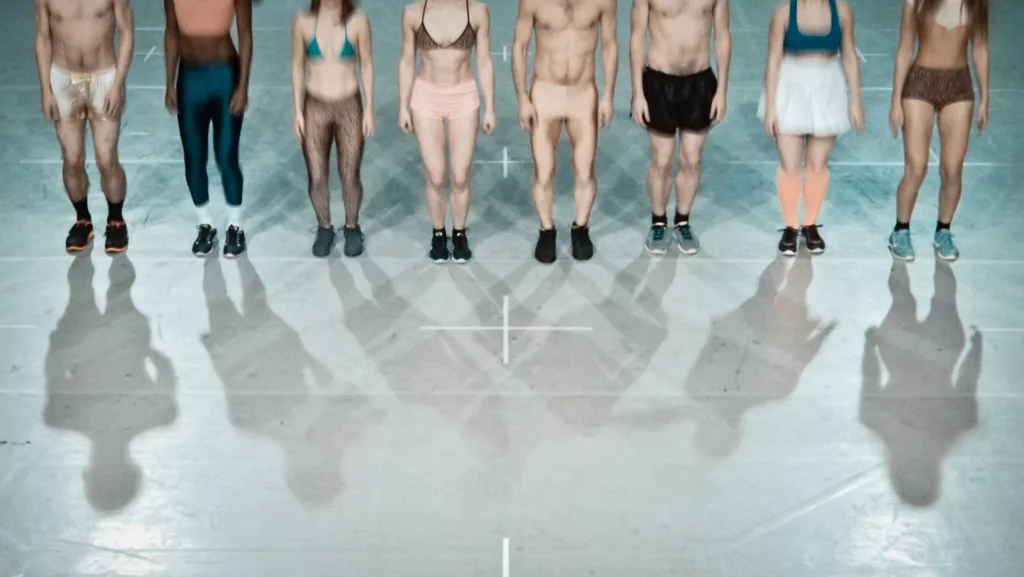
Thanks to its radical choreographic form, THE DOG DAYS ARE OVER revealed the audience’s perception of dancers, choreographers, spectators and the cultural policy at the time. Ten years on, these questions are still very much relevant due to current political and social trends: Where does the thin line between art and entertainment lie? Who are we as an audience when we contemplate the suffering of dancers from the theatre like a bullfight in an arena? Is contemporary dance striptease for the elite? THE DOG DAYS ARE OVER makes the viewer shift in his position: from being merely subjected to the experience to actively reflecting on it.