December 4th – 7th, 2024 Théâtre de la Ville, Paris December 10th, 2024 Espace des Arts, Chalon-sur-Saône December 14th, 2024 Festpielhaus, St. Pölten December 17th – 18th, 2024 Théatre Senart Scéne Nationale, Melun 90 minutes
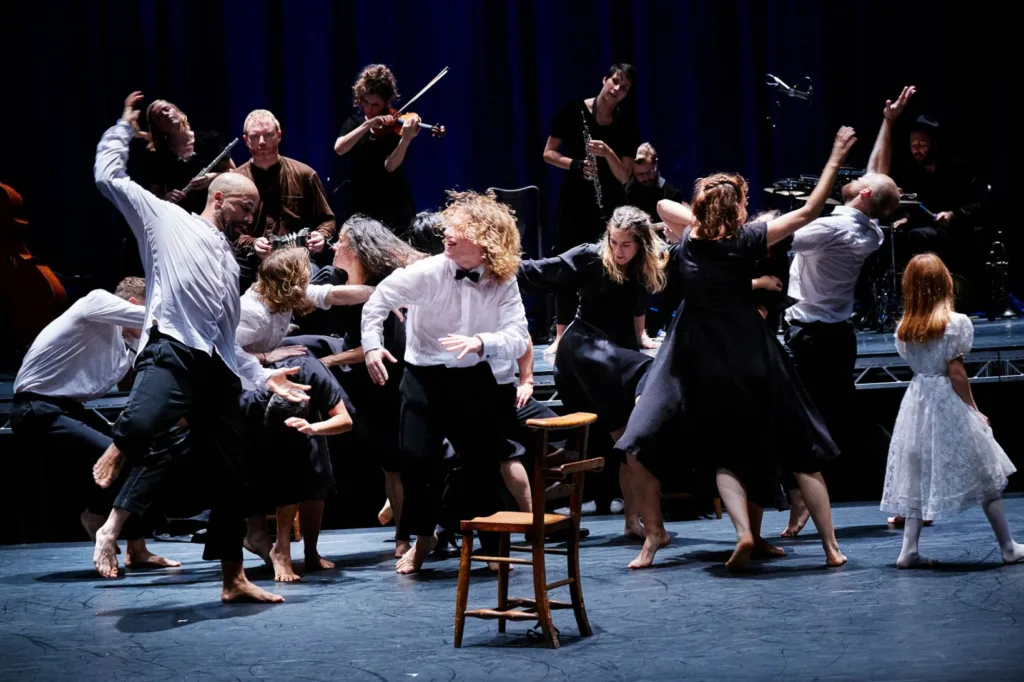
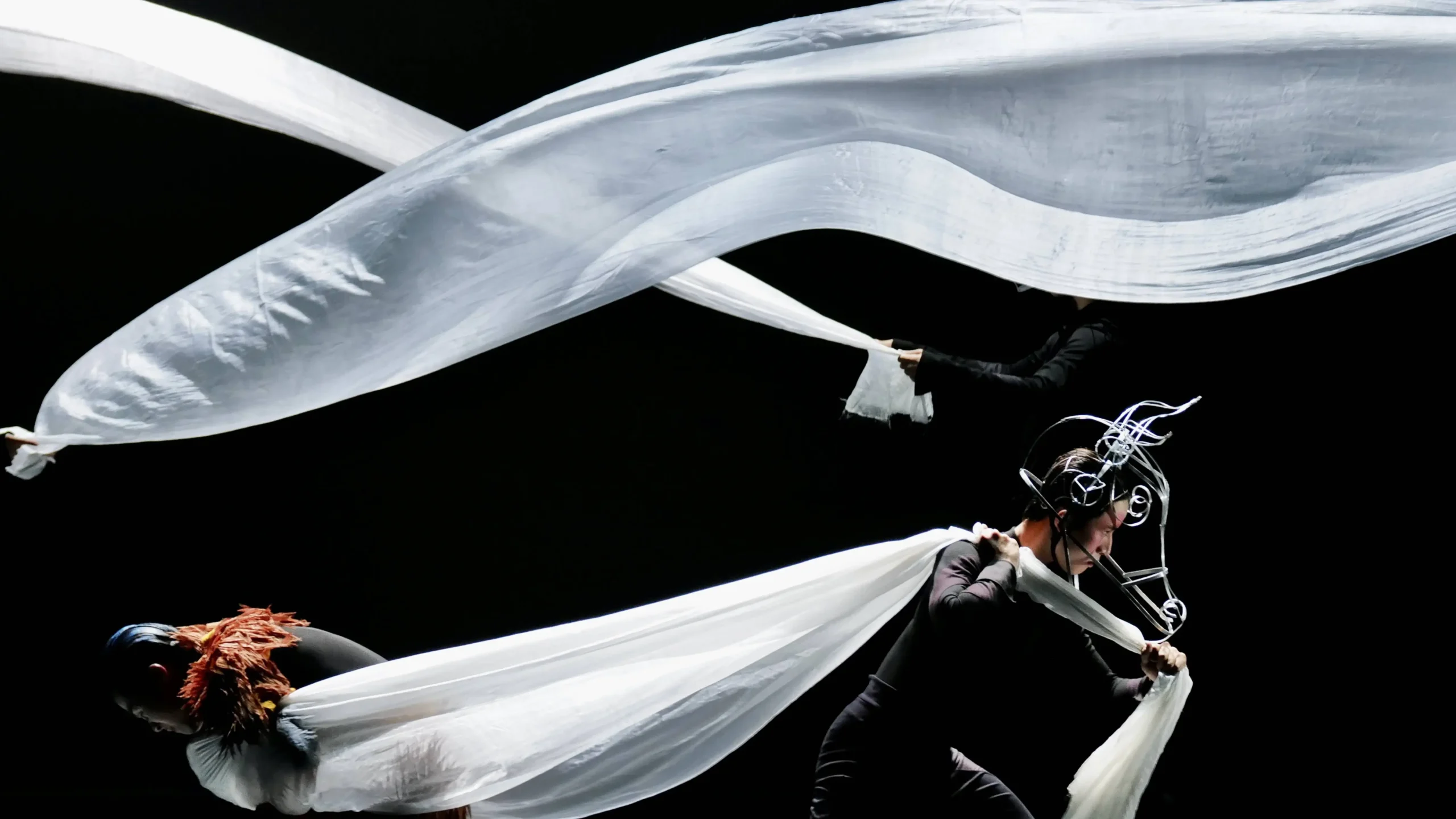
Bringing together the virtuoso, Irish traditional concertina player Cormac Begley, the European classical, contemporary collective, s t a r g a z e and twelve international dancers from the Teaċ Daṁsa company, MÁM is a meeting place between soloist and ensemble, classical and traditional, the local and universal.
Following the success of his acclaimed re-imagining of the world-famous ballet, Swan Lake/Loch na hEala (2016) Michael Keegan-Dolan and Teaċ Daṁsa have created another mythic yet timely production that acknowledges how life’s polarities can on occasion come together and find resolution.
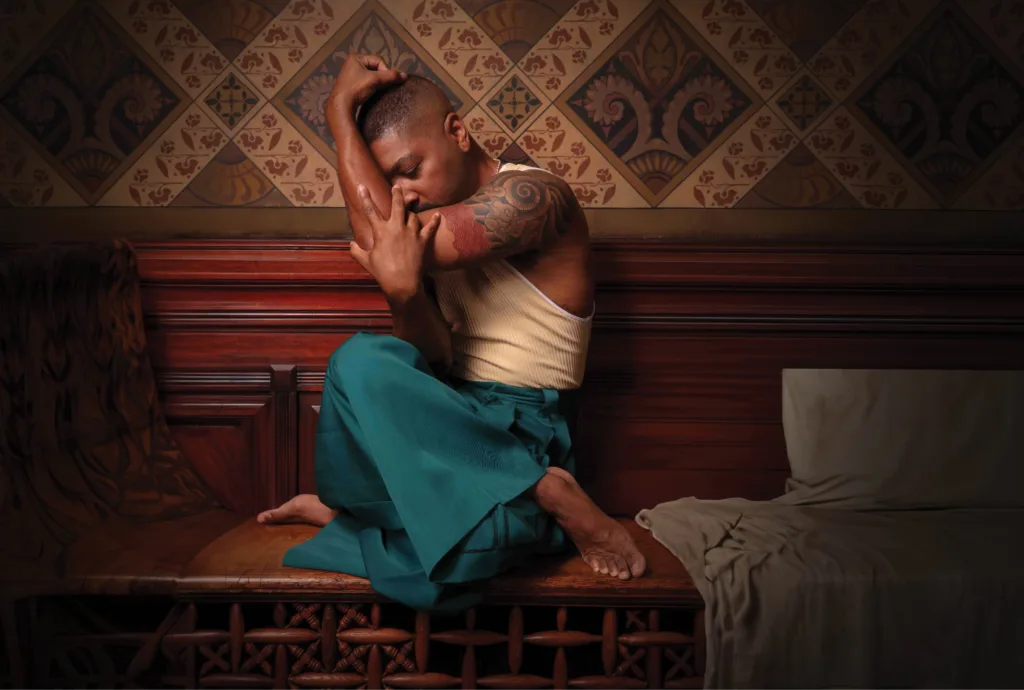
MacArthur Fellow Kyle Abraham is one of the most sought after choreographers and dancers of our time, creating a unique and expressive style of dance that explores issues of identity, history, and geography. In addition to performing and developing new works for his company A.I.M by Kyle Abraham, the bold creator has been commissioned by a variety of dance companies including New York City Ballet, Alvin Ailey American Dance Theater, Paul Taylor American Modern Dance, Hubbard Street Dance Chicago, The Royal Ballet, and The National Ballet of Cuba. He has also choreographed for many of the leading dancers of our time, including Misty Copeland, Calvin Royal III, and Wendy Whelan. He unleashes his signature style—a unique blend of modern dance techniques ranging from ballet to hip hop—in the world premiere of a new evening-length work.
Featuring a large ensemble of dancers with whom he has collaborated from across the country, plus Abraham himself, this Armory commission includes an innovative visual design created by Cao Yuxi (JAMES) and an Armory-commissioned score composed and performed live by the critically acclaimed new music ensemble yMusic to explore the growing sensitivities of life and transition, and nature and humanity, in our chaotic world. The underlying choreography employs layers of counterpoint to find intimacy and evoke ideas of empathy and constant change, fueling an evocative new dance work that migrates through the fragility of time and an ever-changing ecology.
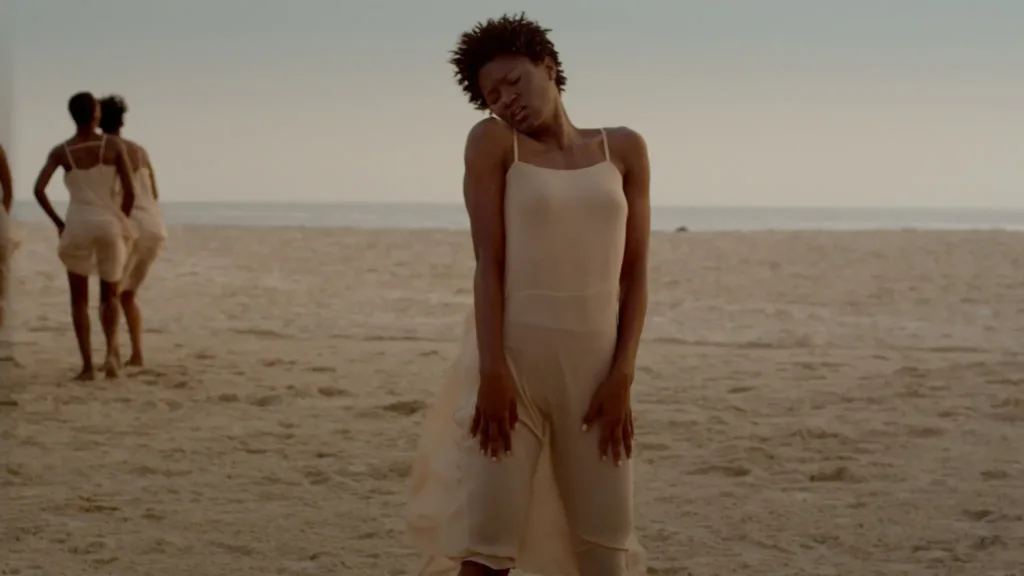
In this stunning film, Pina Bausch’s iconic choreography The Rite of Spring is danced in an extraordinary setting, on the beach in Toubab Dialaw, Senegal.
Filmed in 2020 as the world descended into lockdown, it captures the last rehearsal of a specially assembled company of 38 dancers from 14 African countries and documents a unique moment in their preparations for an international tour. A rare opportunity to watch one of the world’s greatest dance works.
Dancing at Dusk was first shown on Sadler’s Wells Digital Stage in July 2020. That year Pina Bausch’s 1975 seminal work, The Rite of Spring, was due to tour the world. Performed by a specially assembled company of 38 dancers from 14 African countries, this international co-production between Sadler’s Wells (UK), Pina Bausch Foundation (Germany), and École des Sables (Senegal), should have opened in March 2020 in Dakar as part of a double-bill with a new work created and performed by Malou Airaudo and Germaine Acogny, common ground[s]. However, just days before the premiere, performances were cancelled as governments around the world banned public gatherings and began shutting their borders due to the Coronavirus pandemic.
Before disbanding and going into lockdown, the company seized the moment by performing a last rehearsal on a beach near their base at École des Sables in Senegal. Filmmaker Florian Heinzen-Ziob and his crew were able to capture this unique moment in a stunning film.
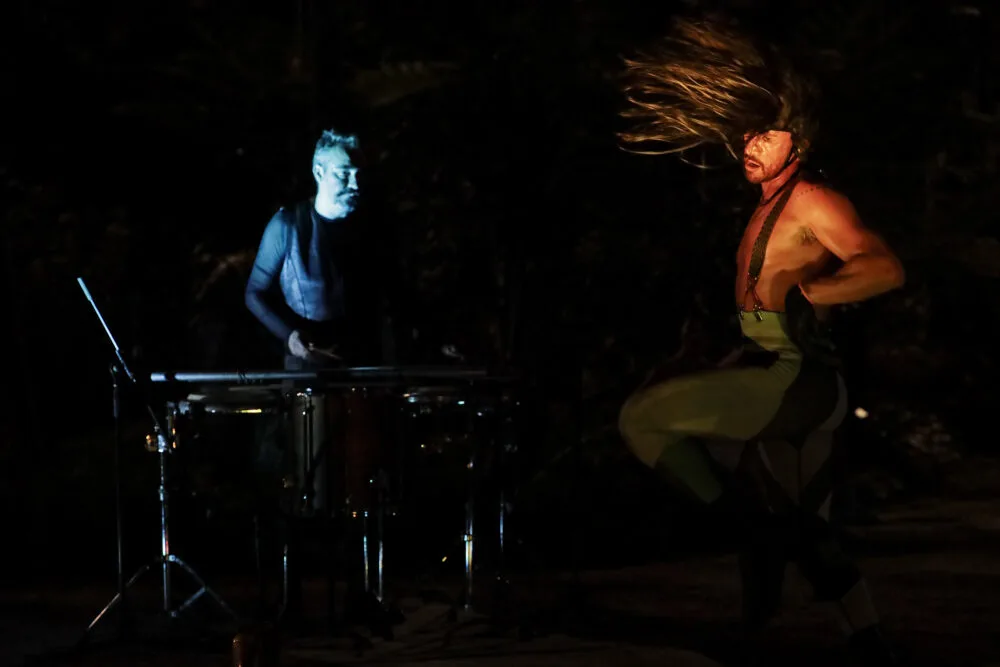
Cowbells were declared an Urgent Heritage Safeguard by UNESCO in 2015. In Terra Cobre, the artists challenge traditional Portuguese iconography and symbolism, placing it in an exploratory and sensory context.
The work consists of a sculptural and sonic installation and a 50-minute performance, performed by Marco and João at the beginning or end of the installation. The installation serves as a backdrop for the performance and contributes to the atmospheric and performative narrative.
Marco and João, collaborating for CARCAÇA , explore concepts of identity, culture and society; reinterpreting ancient cultural heritage and challenging established conventions. They use cowbells to create a sculptural, sonic and physical composition that depicts a landscape full of memories where shepherds and animals come together.
December 8th, 2024 Gare du Midi, Biarritz December 10th, 2024 Le Théâtre Olympia, Arcachon December 14th, 2024 Le Palais des Festivals et des Congrès, Cannes 85 minutes
Yabin Wang Is Back to France with Her Latest Creation
Yabin Wang first traveled the world as a dancer before becoming a prolific choreographer, subtly blending various styles of traditional Chinese dance with contemporary dance techniques.
For Journey to the West, which draws its inspiration from a great classic of Chinese literature, she collaborated with French composer Laurent Petitgirard, whose symphonic music inspired her to create a journey with cinematic aspects of breathtaking beauty.
At the crossroads of East and West, the choreographer breaks boundaries through the language of the body to capture the essence of the original work: a quest for spirituality.
November 30th – Dec. 1st, 2024 Forum am Schlosspark, Ludwigsburg January 25th – 26th, 2025 Théâtre Suresnes Jean Vilar, Suresnes January 28th, 2025 Théâtre Alexandre Dumas, Saint-Germain-en-Laye January 30th, 2025 Le Manège Maubeuge, Maubeuge February 2nd, 2025 Scènes & Cinés, Istres February 4th, 2025 Grand Théâtre de Provence, Aix-en-Provence February 7th, 2025 Le Carré, Sainte-Maxime February 11th, 2025 Romans Scènes, Roman-sur-Isère February 15th, 2025 Théâtre de Roanne, Roanne February 18th – 21st, 2025 Maison de la Danse, Lyon 90 minutes
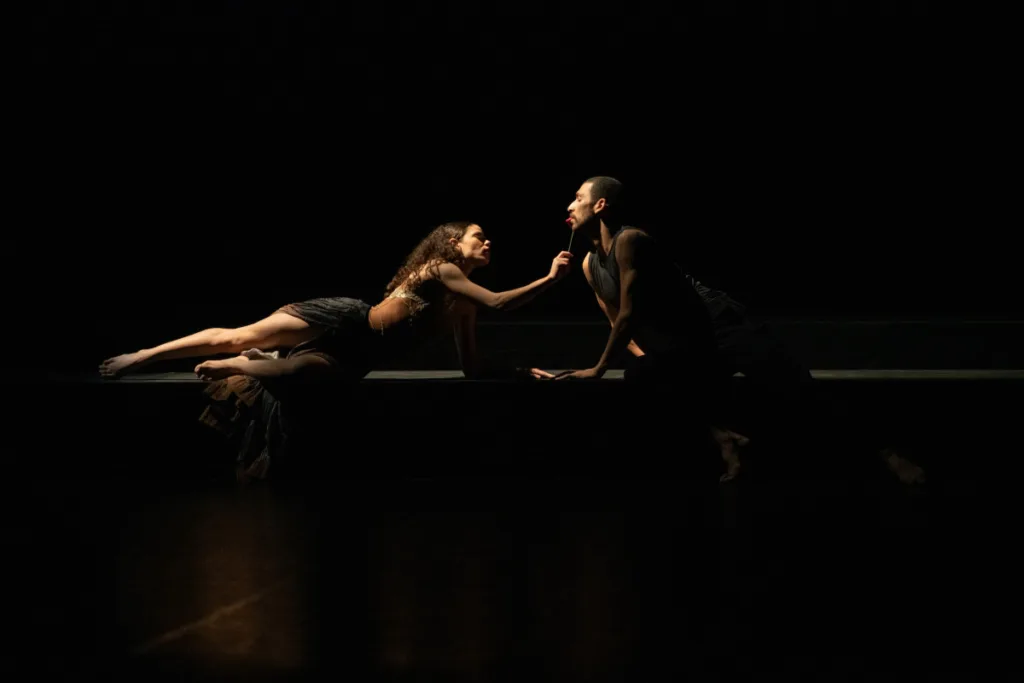
Georges Bizet’s “Carmen” is one of the most famous operas in the world. Still, in Tunisia, it was shown for the very first time in February 2024 – and then as a choreographic opera with the ballet ensemble at the Tunis Opera House. Abou Lagraa, the choreographer, has been working with North African artists for many years. As the child of Algerian and Egyptian parents, his dance roots are, for once, not in hip-hop, but in contemporary dance, including with S.O.A.P., Rui Horta’s legendary Frankfurt company.
In order to find his emotions that underlie the famous arias, Lagraa opted for a sparse, almost minimalist production. For him, the title character not only represents the idolized, teasing seductress, but above all freedom until death. Carmen is the romantic concept of an emancipated woman – a woman who poses a danger to men. Lagraa’s interpretation of the plot draws on the oriental perspective of the story. He deliberately portrays a Carmen of the nomads, the Berbers, and ancient North African people. The choreography oscillates in wave movements, reminiscent of the power of the Mediterranean Sea that unites the Maghreb and Europe.
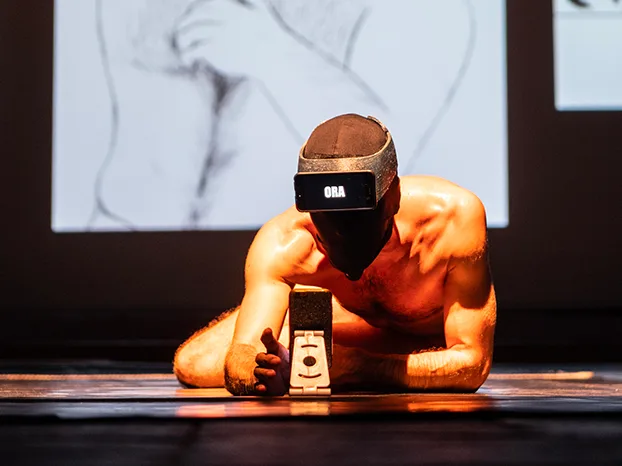
Welcome to an underground digital grid: the world of dating apps. A figure—a speed model—jumps from one profile to another, from one body to another, canceling the distance but continuously looking for a way out. Loneliness, sexual drive, alienation, or simple interaction: which instinct pushes you to choose the closest profile?
GRNDR_Date no one investigates the dating app phenomenon. Apart from being addictive, the use of sex-dating apps affects our way of perceiving the other, their body and their presence, consequences that intertwine with the new human and social relation dynamics. The work is characterized by poses and mutations, in which the body changes, showing the most desirable piece.
Through the screen, the subject is exposed and vulnerable: an anonymous figure shows the best parts of themselves. The identity is irrelevant when the body details are more important, and all that can be demanded is to reach an instant pleasure when all that one might want to sweeten the sense of loneliness is just a few steps away.
Andrea Zardi is an Italian dancer, choreographer and researcher. He trained at Hamlyn Ballet School, Nuova Officina della Danza, Tanzfabrik, Eko Dance Project and National Dance Foundation and worked for national companies and theatres. He obtained a PhD in Performing Arts Disciplines at the University of Turin. In 2018, he founded the ZA DanceWorks company, with whom he deals with artistic planning and curatorship in Italy and Europe. Currently, he is a research associate at the University of Turin.
November 26th/27th/29th/30th & December 1st, 2024 Opernhaus Wuppertal, Wuppertal May 13rd – 15th, 2025 Theatertreffen, Berlin October 11th, 2025 Festspielhaus St. Pölten, St. Pölten October 15th – 18th, 2025 Amare, The Hague November 7th – 9th, 2025 SIDCT, Shanghai June 4th – 6th, 2026 Opernhaus Wuppertal, Wuppertal June 10th – 11th, 2026 LAC, Lugano 100 minutes
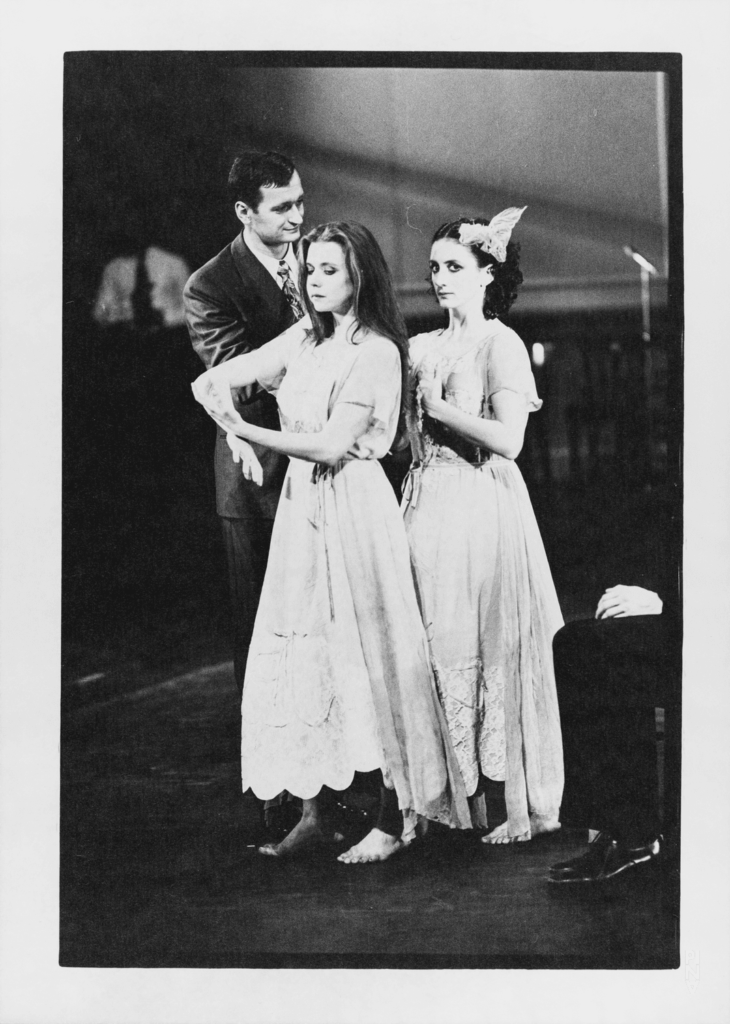
Originally premiered in 1978, Kontakthof is a seminal piece in Pina Bausch’s repertoire, created at a time when her work was beginning to receive international recognition.
It is said that Pina often mused on the idea of seeing her original cast dance the piece when older. Now, 45 years later, a new encounter with Kontakthof is being created by choreographer Meryl Tankard, who was one of the main characters in 1978.
Eight of the original dancers return to their roles as the production creates a poignant interaction between past and present. Kontakthof – Echoes of ‘78 integrates projections of archival footage from their performances as younger dancers, and with company members no longer on stage.
Sadler’s Wells, Pina Bausch Foundation and Tanztheater Wuppertal Pina Bausch
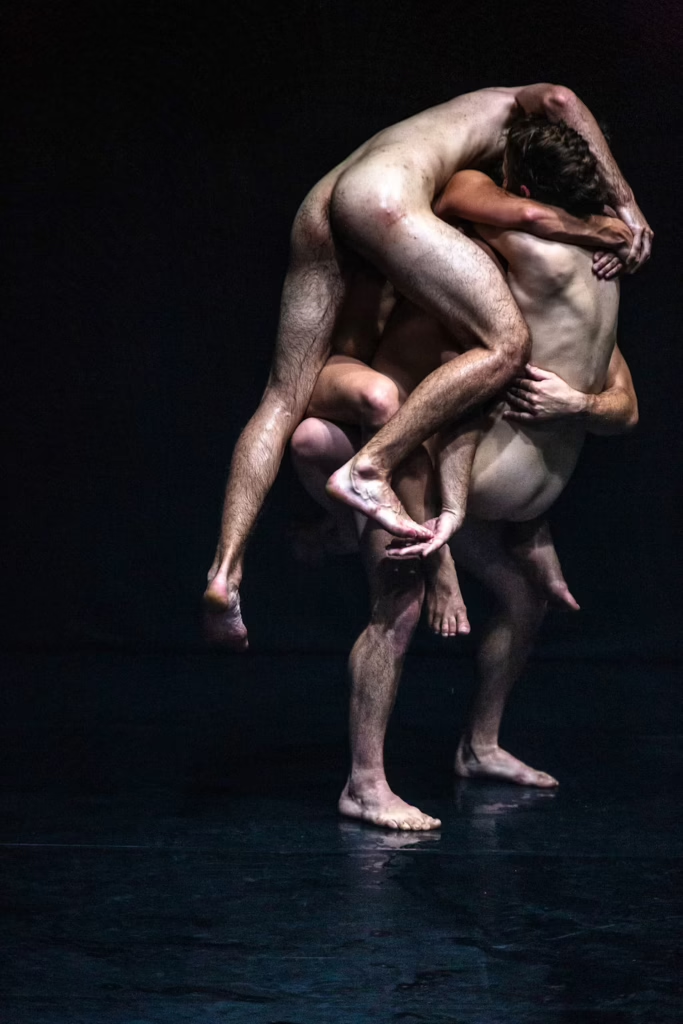
Confronted with the rawness of their nature and the uncertainty of their condition, human specimens explore the space they inhabit and the desire that moves them. However abstract, the drawings borne out by their bodies attest to a tangible commitment by these individuals.
They experiment with movements, test their energies, feel themselves being pushed towards each other or into the void, which threatens to push back its limits… Drifting through the space, they suddenly regain their self-confidence to form a new community.
Through the use of nudity, Sylvain Huc explores the issue of writing, achieving the right balance between the organic nature of the choreography and the natural life of the bodies. The acute, supple movement of the performers, the subtlety of the lighting and the obsessive sound all combine to form a spellbinding continuum.
November 20th – 24th, 2024 Sadler’s Wells, London January 11th – 14th, 2025 Théâtre des Champs-Elysées, Paris February 12th – 16th, 2025 The Joyce Theatre, New York April 10th, 2025 UCSB Arts & Lectures, Santa Barbara April 17th – 19th, 2025 The Kennedy Center, Washington 60 minutes
So that was where he came from, and the story puts in place several elements that went on to recur throughout Khan’s career: classical kathak, contemporary dance, commercial dance, famous figures, international touring, a strong technique and a compelling stage presence. Yet to “come from” somewhere is about more than personal biography: it’s also about cultural milieu.
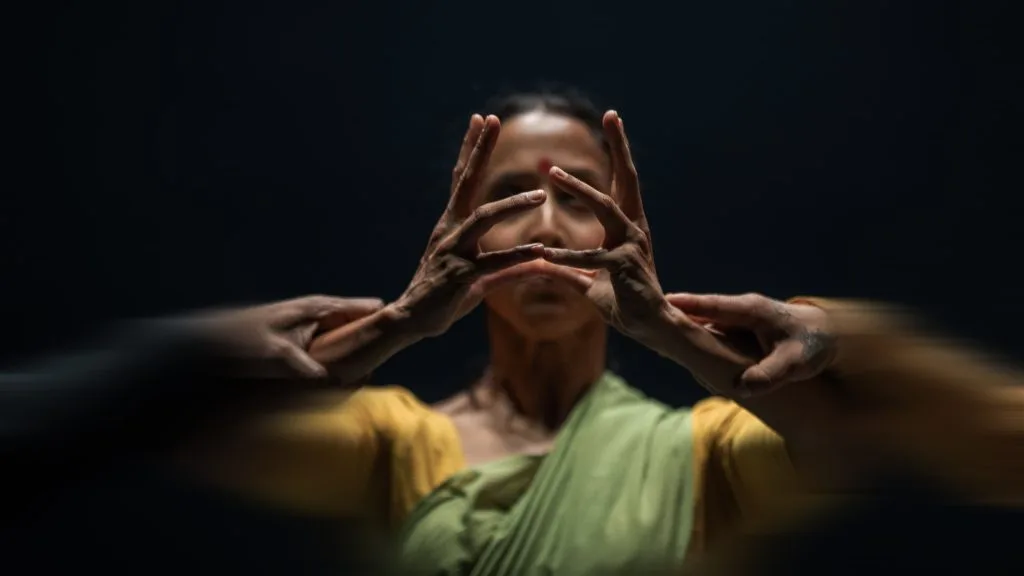
A choreographer and dancer rooted in the tradition of his practice, and a creative interpreter of stories that need to be ‘felt’ – Akram has revolutionised the world of dance. His deeply moving style is simultaneously poetic, innovative and experiential underpinned by intelligently crafted narrative structures. With his bilingual mastery of Kathak and contemporary dance, he has developed a uniquely individual voice as a protagonist of cross-cultural encounters. It is this very encounter, that provokes a personal need for this new creation: a unique work featuring an ensemble of seven renowned artists of Indian Classical Dance (including Akram himself) and seven live Indian Classical musicians.
Drawing from his deep-seated connection to traditional practices and his ability to weave narratives through movement, Akram’s GIGENIS transcends time, invoking the collective memories of our civilisation. It is not just a performance but a profound statement — a testament to the enduring resonance of tradition in a rapidly changing world.